
Achilles tendon rehabilitation
Achilles tendon rehabilitation after surgery or a tear: the phases, from protected walking to strengthening exercises, and how to return safely to sport.
By Dr. Luigi ManziUpdated on
The Achilles tendon , which connects the heel to the calf muscles, is considered the most important tendon in the human body.
Fundamental and essential as well as vulnerable and at risk of injury, the Achilles tendon is often subject to injuries and ruptures , which is why patients are forced to resort to surgery.
Achilles tendon surgery is essential for resolving any problem, but it is equally essential to follow the correct and best possible post-operative recovery.
In this article entitled “Achilles Tendon Rehabilitation” we will investigate the best post-operative recovery techniques for Achilles tendon surgery , what it entails, and how to best approach rehabilitation.
Achilles tendon surgery: what to expect
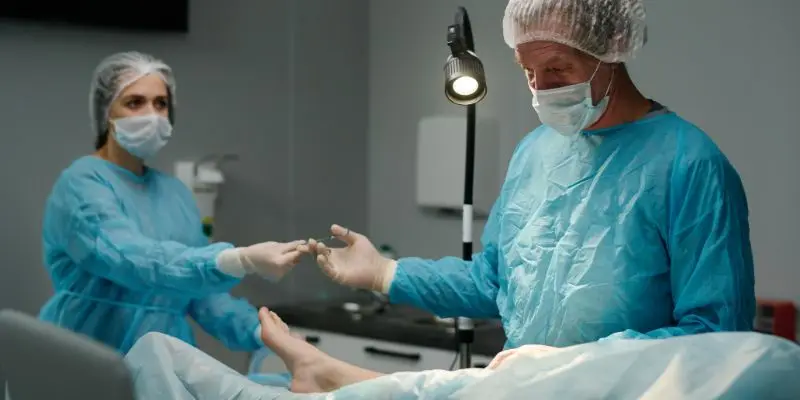
Even before talking about post-operative recovery, it is important to understand the implications of undergoing Achilles tendon surgery.
If the Achilles tendon is severely injured or ruptured, surgery is considered the solution to the problem, as it aims to reconstruct or reattach the injured part, improving outcomes and speeding up recovery.
Most patients and surgeons opt for minimally invasive surgical techniques , which use new techniques and instruments to make minimal incisions in the affected area, thus making the procedure as non-invasive and harmful as possible.
Whether you opt for a minimally invasive or classic surgical technique , immediately after the operation, the heel area will be immobilized , using a cast or brace.
This immobilization phase promotes an initial and fundamental healing phase that can vary from 2 to 6 weeks , depending on both the severity of the injury and the type of surgery chosen.
The Stages of Recovery: Step by Step

As with any other surgical procedure, post-operative recovery following Achilles tendon surgery requires a period divided into several sequential phases.
Let's now look at the different phases in more detail, taking into account the fact that each of them requires commitment and attention, all with the aim of regaining complete mobility of the ankle and the best possible results.
Phase 1: Immobilization and Rest
This first and fundamental phase serves to ensure maximum protection of the tendon that has just undergone surgery.
The heel will be immobilized with a cast or brace , in order to keep the leg and foot in a stable, neutral and stress-free position.
At this stage, with the most modern surgical techniques that offer great stability to the reconstruction, it is possible to place part of the body weight on the leg and, when at rest, the leg must remain elevated, not only to facilitate blood flow but also to reduce any post-operative swelling.
During the initial phase of immobilization and rest, which usually lasts from 2 to 6 weeks , the doctor, when the situation requires it, may also evaluate the prescription of painkillers and anti-edema drugs .
Phase 2: Start of Mobilization
After the first few weeks of immobility, you can begin, always under monitoring and with the surgeon's permission, to introduce the first mobilization exercises for the ankle and foot.
This is one of the most critical phases of the recovery process. The tendon is still fragile following surgery, but it must also begin to regain mobility . For these reasons, it is crucial to maintain active communication with your doctor and follow his instructions step by step.
Once you have the doctor's consent, you can proceed with the initial physiotherapy , which is essential for a correct and healthy recovery.
Physiotherapy will be targeted and personalized ; the patient will need to begin performing the appropriate exercises assigned by the specialist to gradually regain mobility.
During this very delicate phase, which lasts approximately from week 2-4 to week 6-8 after surgery , the doctor may also recommend the use of a brace which not only gives the patient mobility but also further protects the tendon.
Phase 3: Recovery of Strength and Function
After the first 6-12 weeks following the operation, during which you have already begun to regain partial mobility of the leg, you will be able to begin to recover muscle strength and tendon function.
This phase is quite long, lasting up to 24 weeks after surgery.
Physiotherapy becomes more intense and frequent , and from simple mobility exercises, we move on to balance and strength exercises, up to fast walking.
At this stage, it's important not to overstress the tendon. The goal is to regain muscle strength, but not to make the situation worse, but rather to return to daily activities as quickly as possible.
Phase 4: Return to Sports Activity
After 4 to 8 months after the operation , you will finally be able to return not only to complete daily activities, but also to perform proper sports activities.
Obviously, the return to sport varies based on the severity of the situation and the patient's general health. Both factors are always evaluated by the surgeon and the physiotherapist who supervised the treatment.
Only when experts have confirmed that the tendon has regained stability and muscle strength will it finally be possible to resume playing sports.
Sport should always be accompanied by stretching and strengthening exercises , as well as the use of suitable shoes.
Some tips for optimal recovery

Post-operative recovery , in addition to being monitored and managed by the doctor and physiotherapist, can be further completed with measures taken by the patient.
Let's look at some tips together that can further facilitate post-operative recovery:
Be patient and always listen to your body : even if you're eager to return to normal, it's crucial not to rush recovery and to follow the steps carefully. If you overexert yourself and experience the first signs of pain or excessive fatigue, it's a good idea to contact your doctor promptly.
Avoid smoking : Not only does smoking increase the risk of post-operative complications and risks, but it also slows tissue healing.
Follow a complete and balanced diet : as always, a healthy diet supports a healthy lifestyle and, in this specific case, promotes tissue healing. Furthermore, maintaining an ideal body weight will significantly reduce stress on the heel.
The Importance of Personalized Support: SmartHallux

Post-operative recovery from Achilles heel surgery is unique and personalized for each patient.
For this very reason and more, it is essential to rely on the best experts in the sector.
If you're wondering who you can trust not only for the best post-operative support, but also for the surgery itself, SmartHallux is undoubtedly what you're looking for.
Specializing in foot and ankle pathologies, the experts at SmartHallux not only provide detailed and professional information on any pathology, but also follow you step by step from diagnosis to rehabilitation.
It's helpful to know that SmartHallux not only has several locations in Italy where you can contact us, but thanks to the online booking system for your first specialist appointment, you can not only book your appointment from home, but also choose how you want to do it.
You can visit one of our locations or conveniently book your appointment online from home. What are you waiting for? Booking your SmartHallux appointment is easy, just click here.