Have you ever woken up in the morning and felt a sharp pain in your heel as soon as you put your foot down? If you're reading this article, you probably have. And maybe someone suggested trying apple cider vinegar, right?
I need to be honest with you right from the start. As an orthopedic surgeon who deals with foot problems on a daily basis, I often get questions about natural remedies. Apple cider vinegar for plantar fasciitis is one of the most popular. But does it really work? Let's take a look at what science says and, more importantly, what advice I can give you based on my clinical experience.
What is plantar fasciitis really?

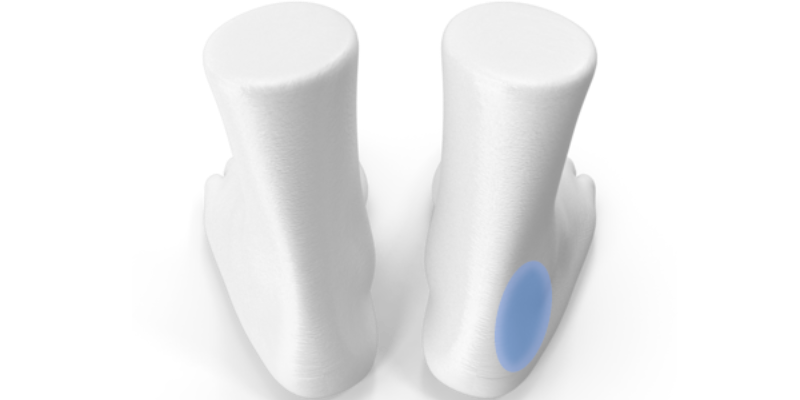
Plantar fasciitis is one of the most common causes of heel pain I see in my office. Think of the plantar fascia as a thick "rope" that connects your heel to your toes, running under your arch.
When this fascia becomes inflamed—that's fasciitis—every step becomes agonizing. My patients often tell me, "Doctor, it feels like I've got a nail stuck in my heel." Others describe a burning sensation or a sharp pain that starts at the heel and radiates toward the arch of the foot.
The pain is typically worse in the morning. Why? During the night, the fascia shortens and stiffens, so the first steps are the most painful. Then, with a little walking, the tissue "warms up" and the pain may subside.
Why plantar fasciitis occurs

There are many causes, and they often occur together. Age plays a role—after 40, the risk increases because the tissues lose elasticity. But I also see fasciitis in young athletes or people who spend long hours on their feet for work.
Being overweight is a significant factor. Every extra pound puts additional strain on that poor plantar fascia. And then there are flat or high arch feet, the wrong shoes—how many times have I seen patients who walked for months in completely inadequate shoes!—and sports that put a lot of strain on the feet, like running or tennis.
Sometimes it's actually a direct trauma. The other week, a woman came to me who had developed serious fasciitis after a long hike in the mountains wearing new shoes. Never do that!
Symptoms you should recognize

Heel pain is the main symptom, but it's not the same for everyone. Some patients tell me about a sharp pain, others about a dull, persistent ache.
What almost everyone has in common is "first step pain": in the morning or after sitting for a long time, the first movements are terrible. The pain may then subside, but it may recur after long walks or at the end of the day.
In some cases, the pain radiates along the entire arch of the foot. Other patients report numbness or tingling in the toes. And there's always that damned sensitivity on the bottom of the heel—even just touching it hurts.
How do I diagnose?

When a patient comes to my office with these symptoms, the diagnosis is often already fairly clear from the medical history. But obviously I need to be precise.
First, I observe how he walks, where he puts his weight, and whether he limps. Then I palpate his foot—yes, I know it hurts, but I need to understand exactly where and how. I test the flexibility of his ankle and calf muscles, as they're often linked to the problem.
In many cases, I request an ultrasound, which allows me to see the condition of the plantar fascia, whether there is thickening or inflammation. I use X-rays to rule out other conditions, such as heel spurs, which often accompany fasciitis but are not the direct cause.
Apple cider vinegar: properties and what we know

Now let's get to the point. Apple cider vinegar does indeed have some interesting properties. It contains acetic acid, which theoretically could have anti-inflammatory effects. Some studies suggest it can help reduce inflammation, although most research concerns its internal use for other ailments.
For plantar fasciitis, the idea is to use it externally, in foot baths or direct applications. The rationale? To reduce local inflammation and relieve pain. But be careful—and I must be clear here—there is virtually no scientific evidence specifically for plantar fasciitis.
This doesn't mean it doesn't work. It just means we don't have controlled studies to prove it. After all, many natural remedies have this limitation.
How to use apple cider vinegar for fasciitis

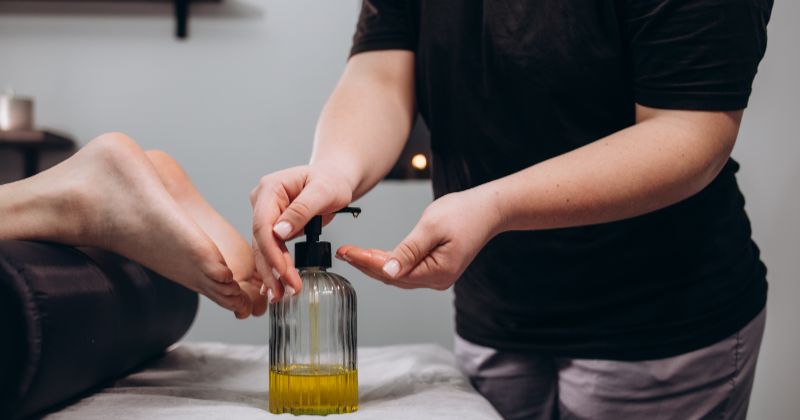
If you want to try—and I'm not against natural remedies when they're safe—here's how. For foot baths, dilute half a cup of apple cider vinegar in a bowl of warm water. Soak your feet for 15-20 minutes, once a day.
For direct application, you can make compresses. Mix equal parts apple cider vinegar and water, soak a cloth, and apply it to the painful area for 10-15 minutes. Be careful, though: pure vinegar can irritate the skin, so always dilute it.
Some patients have told me they've seen relief. Others have seen no improvement. This is normal—every body reacts differently.
Beware of contraindications

Apple cider vinegar isn't as harmless as it seems. It can cause skin irritation, especially if you have sensitive skin or if you use too high a concentration. I've seen redness and burning in patients who used it neat.
If you take blood thinning medications or have diabetes, talk to your doctor first. And never, ever use on open wounds or broken skin.
Treatments that really work

Now, as an orthopedic surgeon, I have to tell you which treatments have solid scientific evidence. Stretching exercises for the plantar fascia and calf are essential—I have all my patients do them.
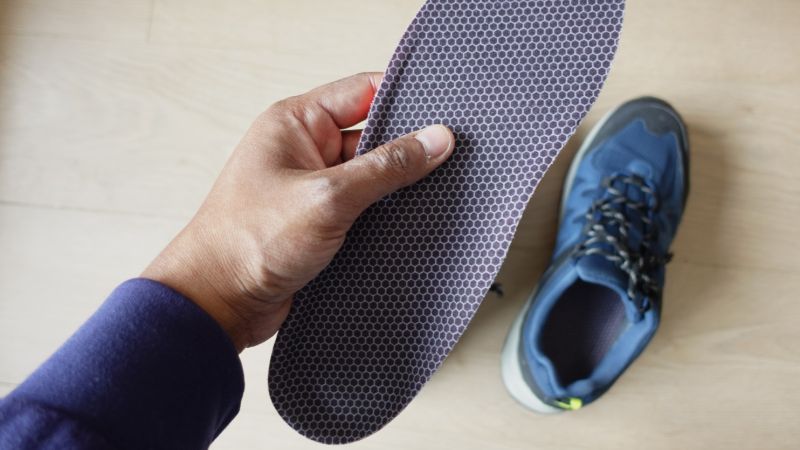
Ice works very well for acute inflammation. Custom-made insoles are often effective, especially if there's a biomechanical problem with the foot. Anti-inflammatories, used for short periods, provide relief.
In the most resistant cases, I use extracorporeal shock waves—a highly effective therapy that stimulates tissue healing. And in rare cases, when all else has failed, surgery may be considered, but this represents a very small percentage of patients.
When you absolutely must see a specialist

If the pain persists for more than a few weeks, don't wait. If it gets worse despite the remedies you're trying, it's time to see a specialist. And if significant swelling, fever, or the pain becomes unbearable, don't delay.
Chronic plantar fasciitis can become truly debilitating. I've seen patients who endured the pain for months, only for it to get worse. Don't make this mistake.
SmartHallux: Where we can help you

Here at SmartHallux, we specialize in foot and ankle surgery. Dr. Luigi Manzi, who has extensive experience in this field, provides each patient with a personalized treatment plan using the most modern techniques.
The SmartHallux team treats conditions such as hallux valgus , Morton's neuroma , and other deformities that cause foot pain. Providing comprehensive support throughout the treatment process, SmartHallux can be a winning choice for effective treatment tailored to your needs. Book your specialist consultation with the SmartHallux team now.
FAQ
Can apple cider vinegar really cure plantar fasciitis?
I'll tell you frankly: it can provide relief in some cases, but "cure" is a strong word. My patients who have tried it have had very variable results. There's no harm in trying, as long as it's in addition to proven therapies, not instead of them.
How long does it take to heal from plantar fasciitis?
It depends on many factors. With the right treatment, many patients improve in 2-3 months. But I've seen cases resolve in a few weeks, and others that took over a year. The important thing is not to give up and to follow the therapies correctly.
Can I continue to play sports with plantar fasciitis?
It depends on the type of sport and the intensity of the pain. In the acute phase, rest is best. However, you can often continue with low-impact activities, using insoles and stretching before and afterward. Each case must be evaluated individually.