
Hallux varus: when the big toe "runs away" inward and what you can do
Hallux varus is a deformity in which the big toe points inward, away from the other toes. The causes, the symptoms and when treatment or surgery is needed.
By Dr. Luigi ManziUpdated on
Sometimes you look at your feet and notice something strange: your big toe isn't straight, but seems to point inward, almost as if reaching for the other foot. It doesn't cause pain, at least not right away, but something isn't right. This is where hallux varus comes in , a little-known but important condition to recognize.
Unlike the more common hallux valgus (which pushes outward), hallux varus does the opposite. The big toe tilts toward the inside of the foot, closing the space between the toes and, over time, creating problems with walking and standing.
Where does this deviation come from?

In most cases, it's something you're born with. In children, it's noticeable from an early age, although sometimes the condition improves on its own. In other cases, however, it develops over time. It can occur after trauma, due to poor foot placement, or—what many people don't know—even after a botched foot surgery.
Some people don't notice the deviation right away. Until one day, putting on shoes becomes more difficult, or an annoying feeling of friction or instability appears while walking.
How do you notice it?

In addition to the visible change in the position of the big toe, hallux varus can cause subtle symptoms that we don't always immediately associate with the foot. Some people begin to limp slightly, others complain of pain on the inside of their foot, and others discover new calluses that weren't there before. Others simply feel that something isn't working as it used to, perhaps after long walks.
It is not uncommon for parents to notice it in their children by observing how they walk barefoot or during sports.
What happens at the doctor's?

A thorough orthopedic examination is the first step. Nothing complicated is needed at first: they examine your foot, observe how you move, and assess the structure. If they need further clarification, they take a weight-bearing X-ray, that is, while you're standing, to see how the bone behaves under pressure. Don't worry, it's all very simple and painless.
How is it treated?
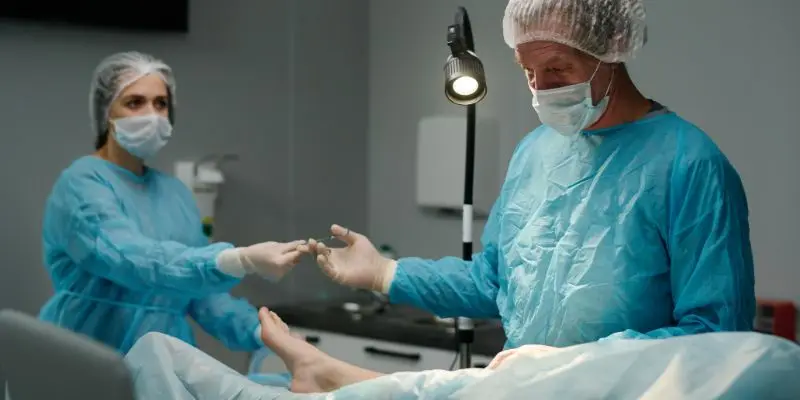
It depends on how severe the deviation is and when it was discovered. In young children, observation is often enough, perhaps using lightweight orthotics or more structured footwear. But if the situation worsens, or if the child is already an adult and the pain is noticeable, then other solutions are needed.
Custom-made insoles, physical therapy, and shoes with room for the toes all help. However, if hallux varus causes serious discomfort or limits your mobility, surgery may be the right option. Today's techniques are precise and minimally invasive, designed to correct the problem without distorting the foot.
And after the surgery?
No casts or complicated immobilizations. In many cases, you can walk after just a few days, wearing a post-op shoe. Then you begin a short recovery program with targeted exercises. The goal? To get your foot moving again, pain-free, and walk as well as before—if not better.
Stop for a moment: is your foot telling you something?

If you notice your big toe moving inward, or if your child's gait seems a bit crooked, don't wait; the hallux varus could be worsening. A visit can clarify everything, prevent further deterioration, and, if necessary, begin the most appropriate treatment right away.
SmartHallux offers an innovative solution, combining advanced technologies and accurate diagnosis, for personalized treatment of toe pain. Thanks to the expertise of a team of expert surgeons, led by Dr. Luigi Manzi , SmartHallux offers innovative treatments ranging from diagnosis to surgery, if necessary.
The team treats conditions such as hallux varus, Morton's neuroma, and other deformities that cause toe pain. Providing comprehensive support throughout the treatment process, including post-operative recovery, SmartHallux can be a winning choice for effective treatment tailored to your needs. Book your video consultation with Dr. Luigi Manzi now.
FAQ
Who is Dr. Luigi Manzi?
An orthopedic surgeon specializing in foot and ankle surgery, he has been a long-time go-to for those seeking a modern and personalized approach. He is also the national director for SmartHallux.
What does SmartHallux do?
It combines innovation and accessibility, offering rapid diagnoses, modern surgical techniques, and customized treatments for each patient, including hallux varus.
What foot problems does he deal with? SmartHallux?
Everything from hallux rigidus to plantar fasciitis, including flat feet, metatarsalgia, Achilles tendon ruptures, and of course hallux varus.