
Bone callus on the foot: what you need to know and how to treat it
A bone callus on the foot is new bone that forms where the bone has been irritated or has healed after a fracture, often at the heel. The causes and treatment.
By Dr. Luigi ManziUpdated on
Have you ever felt pain under your foot, perhaps in the heel, and thought, "What is this hard thing that's formed?" Well, you've probably come across what we orthopedists call a callus.
It's not exactly the classic callus we all know. No, this is different. It's the bone reacting, thickening, trying to defend itself from something that's been bothering it for a long time. Calluses on the foot are more common than you think, and often form right where the foot works hardest: on the heel, the calcaneus, or sometimes behind the heel.
What exactly is this bone callus?

Think of bone as living tissue. Intelligent, I'd say. When repeatedly stressed, when it undergoes continuous microtrauma, the bone reacts by thickening. It's as if it's saying, "Okay, since there's always pressure here, I'll strengthen myself." The result? A bony protrusion, a lump that can become painful.
Heel calluses are probably the ones I see most often in my office. Patients come in and say, "Doctor, I have this pain in my heel, especially in the morning." When I feel the area, there it is: a hard, well-defined lump.
After all, the heel is the bone that takes the most abuse during the day. With every step you take, it absorbs the initial impact when your heel hits the ground.
Why does it form? The causes I see most often
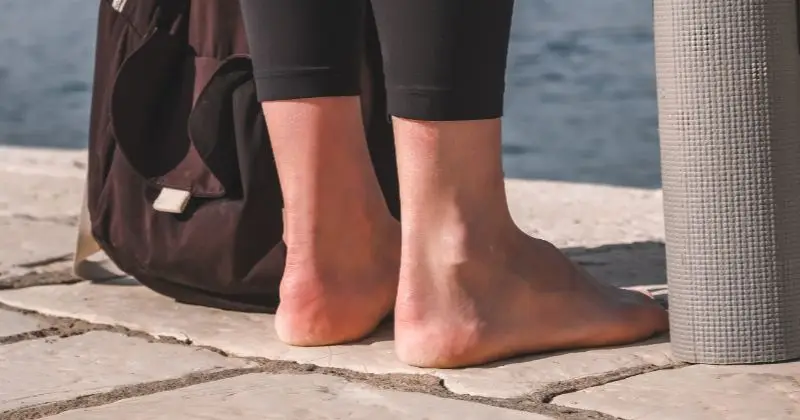
The main cause? Repeated overloading. I remember a patient from a few months ago, a woman who had started running to lose weight. A good idea, but she was wearing the wrong shoes and doing too much, too fast. The result: a callus behind her heel that hurt like hell.
But it's not just sports. Work can also be a factor. People who stand for long hours, walk on hard surfaces, or perhaps have poor posture. The wrong shoes are a classic: high heels that shift all your weight forward, shoes that are too tight and compressive.
Osteoarthritis can contribute. When the joints in the foot no longer function smoothly, overload points arise. And the bone, as I mentioned, reacts by thickening.
Even trauma. A poorly treated sprain, a fracture that hasn't healed properly. The bone "remembers" and sometimes develops these formations as a defense mechanism.
Symptoms: how it manifests itself
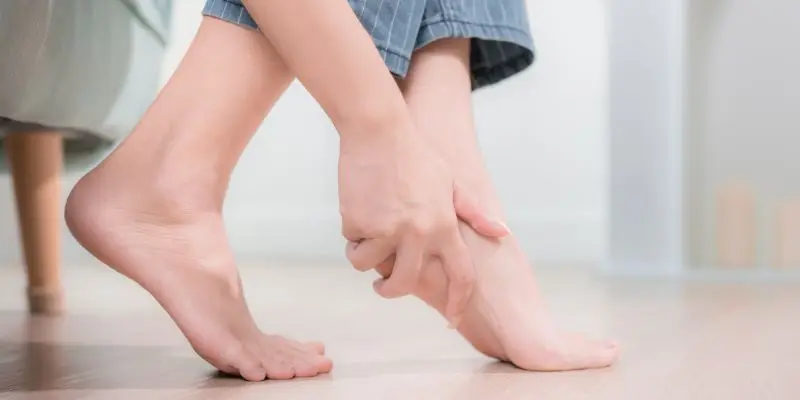
Pain is the main symptom, but it's not always the same. Some patients describe a dull, constant ache. Others, however, describe sharp stabbing pains, especially when they place their foot in a certain position.
"Doctor, it hurts, especially in the morning when I get out of bed." I hear this phrase often. My foot, which has been resting all night, protests at the first touch. Then, after a few steps, the pain eases.
Sometimes a small bursitis also forms around the callus. This is inflammation of the soft tissue surrounding the bony protrusion. In these cases, the pain may be more diffuse and the foot may appear slightly swollen.
How do I diagnose in my office?

When a patient comes to me with a suspected callus, the first thing to do is look and touch. The physical examination tells me a lot. I palpate the foot, look for tender spots, and assess its shape and function.
But to be 100% sure, an X-ray is needed. It's the simplest and most immediate test for seeing the bony formations. The X-ray clearly shows me if there's a protrusion, how big it is, and where it's located.
Sometimes, if the picture isn't very clear or I suspect other associated pathologies, I may request an ultrasound or even an MRI. The ultrasound is useful for seeing the soft tissue around the callus, while the MRI provides a complete picture of everything going on in that area of the foot.
Differential diagnosis is important. I need to rule out other conditions that can cause similar symptoms: plantar fasciitis, bursitis, tendonitis. Each has its own specific characteristics.
Treatments: from gentle treatments to surgery
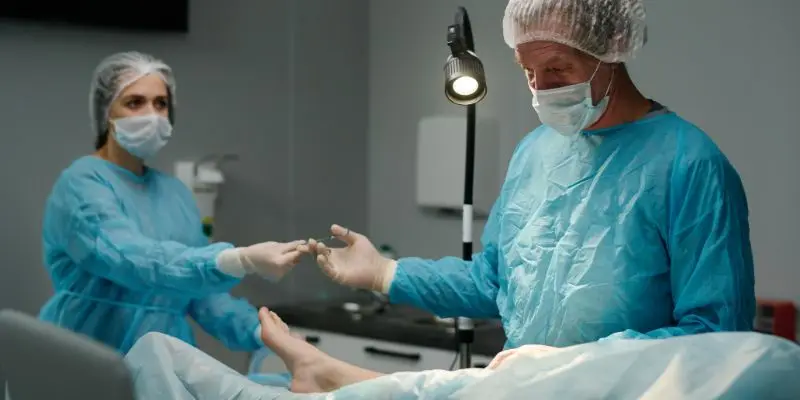
We always start with conservative treatment. Relative rest (this doesn't mean staying still, but avoiding activities that worsen the pain), ice for 15-20 minutes when the pain is acute, and anti-inflammatory medications to control pain and inflammation.
Custom-made insoles often work wonders. They redistribute weight and relieve pressure on the callus area. It's amazing how a well-made insole can change the life of a patient with a heel callus.
The right shoes are essential. Shoes with good arch support and shock-absorbing soles are recommended. Avoid high heels or flat shoes.
Physiotherapy can help, especially if there is muscle stiffness or imbalances contributing to the problem.
But what if conservative treatment isn't enough? This is where surgery comes in. It's not always necessary, in fact. But if the callus causes constant pain, significantly limits the patient's quality of life, and all conservative treatments have failed, then surgery may be the solution.
The surgical procedures we can perform
Direct callus removal is the most common procedure. The bony protrusion is removed and the bone surface is smoothed. It is a relatively simple procedure, often performed as a day surgery procedure.
Sometimes something more is needed: an osteotomy to correct a misalignment that is causing overload, or in more complex cases, an arthrodesis if there is joint instability.
Enucleation is another technique, especially when the callus has a more limited component.
Complications: What can go wrong?
As with any procedure, there are risks. Infection is always possible, although rare with modern techniques and antibiotic prophylaxis. Chronic pain may persist in some cases, especially if there are other associated, unresolved conditions.
Deformities or functional limitations can rarely occur, but with good preoperative planning these risks are truly minimal.
Prevention: better safe than sorry
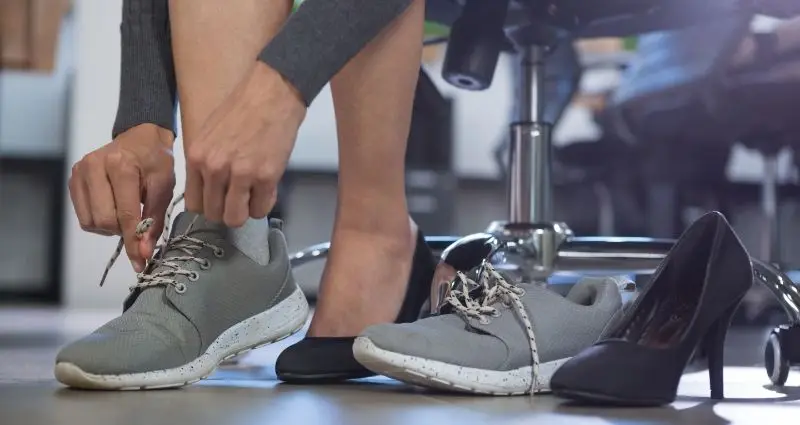
Proper footwear is the foundation of everything. Shoes that fit well, not too tight, and provide good support. For athletes, shoes specifically designed for their activity.
Regular but gradual physical activity. If you decide to start running, don't run 10 km on the first day. Your body needs time to adapt.
Weight control. Excess weight places a constant strain on the feet. Losing weight often significantly reduces foot pain.
SmartHallux: Where we can help you

Here at SmartHallux, we specialize in foot and ankle surgery. Dr. Luigi Manzi, who has extensive experience in this field, provides each patient with a personalized treatment plan using the most modern techniques.
The SmartHallux team treats conditions such as hallux valgus , Morton's neuroma , and other deformities that cause foot pain. Providing comprehensive support throughout the treatment process, SmartHallux can be a winning choice for effective treatment tailored to your needs. Book your specialist consultation with the SmartHallux team now (opens in a new tab).
Questions you often ask me
Doctor, why should I have surgery for corns?
Look, surgery isn't always necessary. I only consider it when the callus causes significant pain that limits your daily activities, and when all conservative treatments have failed. The decision depends on how much the problem impacts your life, your age, and your expectations.
But is it true that it can only be cured with surgery?
Absolutely not! In fact, in most cases we can manage the problem without surgery. Insoles, physiotherapy, appropriate shoes, and medications when necessary. Surgery is the last option, when all else fails.
What exactly causes calluses on the foot?
It's almost always a matter of repetitive overload. Bones subjected to continuous microtrauma react by thickening. This can be caused by wearing the wrong shoes, poor posture, playing poorly, or even conditions like osteoarthritis that alter the mechanics of the foot.