
Comparison of brachymetatarsia and hammertoe: surgical treatments
Brachymetatarsia and hammertoe look alike but have different causes: a short metatarsal versus a bent toe joint. How to tell them apart and treat them.
By Dr. Luigi ManziUpdated on
In this article, titled " Brachymetatarsia vs. Hammertoe, " we'll compare these two conditions. We'll discuss the best surgical treatments for both, so you can walk normally again.
Brachymetatarsia of the foot
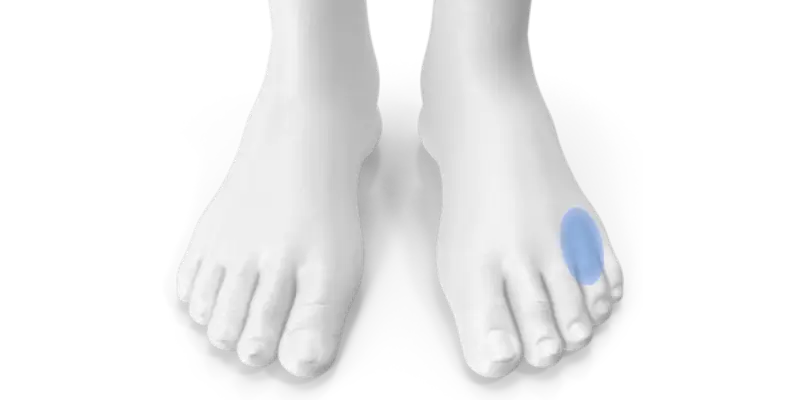
Brachymetatarsia is a condition affecting the foot, specifically the metatarsals. The metatarsals are the series of long bones in the foot that, under normal conditions, lengthen. When one of these bones stops growing, brachymetatarsia appears in the foot.
There are various causes for this condition. Often, brachymetatarsia runs in families . It could also develop due to trauma or health conditions like arthritis . The symptoms? Pain, difficulty finding suitable shoes , and sometimes a slightly unusual walking style.
Walking with brachymetatarsia is indeed not easy. It can significantly impact mobility and comfort . Some experience pain when walking, others develop calluses, and in general, finding the perfect pair of shoes becomes complicated.
Surgery for brachymetatarsia

When it comes to correcting brachymetatarsia, surgery is the only way to lengthen what's already short. Let's look at the most common treatments.
Metatarsal extension and osteotomy
Metatarsal lengthening involves the placement of a device that gradually lengthens the bone. Osteotomy , on the other hand, is more sophisticated. It involves cutting and reshaping the bones. Other techniques, such as bone grafting , may also be used, but the procedure depends on the patient's specific condition.
Post-operative recovery
Post-operative recovery depends on the patient and the type of surgery. Having a new, lengthened metatarsal requires patience. The foot requires rest, ice, and a lot of attention, as well as a doctor to monitor everything. Recovery can take weeks or months , but in the end, walking without pain and with the right balance can make every step a small triumph.
Hammer toes

Hammer toes occur when one or more toes bend, taking on a "hammer" shape. The cause can be found in several factors. Among the main causes are:
- Inadequate footwear: shoes that are too tight or heels that are too high can cause this condition.
- Muscle problems: when muscles and tendons don't work together.
- Arthritis: rheumatoid arthritis can bend the fingers.
Among the symptoms, however, we find:
- pain;
- calluses and blisters;
- difficulty walking.
Effects on mobility and comfort
Those who suffer from hammertoes experience an unsteady gait, and the imbalance can cause pain in other parts of the foot and even in the back. The pleasure of walking quickly turns into a painful experience.
Hammer toe surgery
We begin with a flexotomy , where some tendons are cut to straighten the fingers. In arthroplasty, however, the bone portion is removed, returning the fingers to their natural position. Internal implants and fixations are also available.
Post-operative recovery
Recovery takes some time. Rest, leg elevation , and ice are your best allies. The important thing is to follow your surgeon's instructions to the letter.
Comparison of surgical treatments
Getting off to a good start when choosing between surgical treatments for brachymetatarsal and hammertoes might seem simple. But when it comes to restoring dignity to your feet, things are a bit different.
Let's start with brachymetatarsia: the most common surgical method is bone lengthening through gradual distraction . It's a slow and delicate process using a bone distractor . The result? More centimeters gained.
For hammertoes, however, you can choose between joint fusion (where the bones are cemented into a suitable position) and tendon release . However, to avoid further problems, it's advisable to discuss this with an orthopedic surgeon.
Ask SmartHallux for advice

SmartHallux can solve problems such as brachymetatarsia and hammertoes using the most advanced technologies. If you suffer from pain and difficulty walking, it's time to say no. SmartHallux uses cutting-edge surgical techniques such as metatarsal lengthening and osteotomy for brachymetatarsia, and flexotomy and arthroplasty for hammertoes. These procedures ensure precision, less tissue trauma, and a faster recovery. Don't let pain limit your daily life. Book a consultation with our experts now using the booking form on the website.