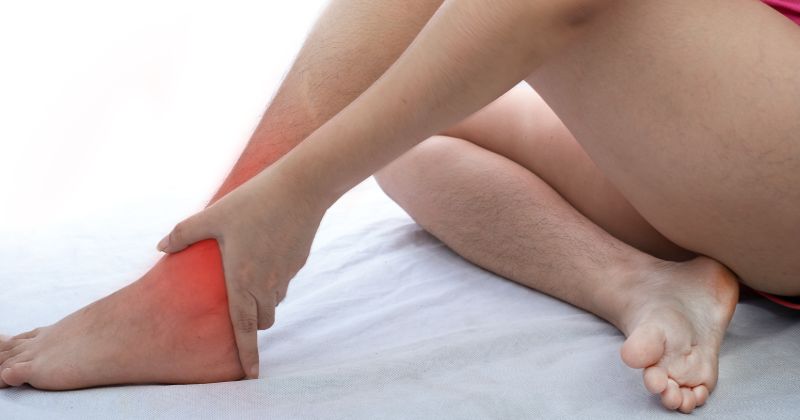
Have you ever woken up in the morning with a sharp pain in your heel? You put your foot down and… ouch! It's like someone is pricking you with a needle right under your heel.
So, you've probably heard about the infamous heel spur. And perhaps someone has already mentioned shockwave therapy for heel spurs as a possible solution. But how much does it cost? Does it really work? Let's try to shed some light on this topic, which frankly generates a lot of confusion among my patients.
What is this blessed heel spur?
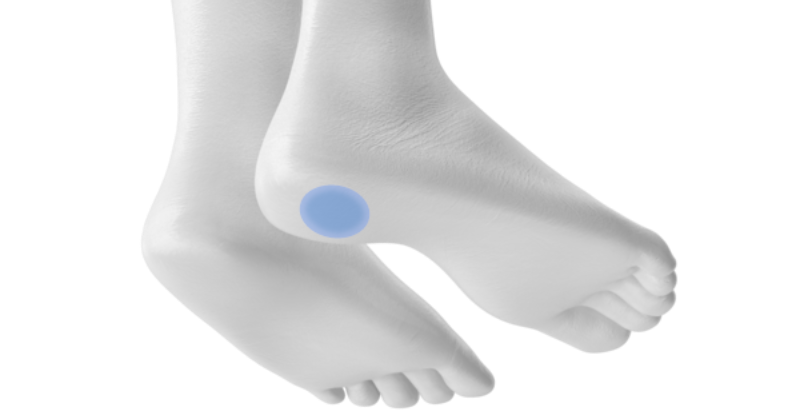
A heel spur is essentially a bone spur that forms under the heel. It doesn't just appear out of nowhere. It develops because the plantar fascia—that band of tissue that runs from the ball of the foot to the heel—pulls too hard on the heel bone for months or years.
It's like having a rubber band attached to a hook that's constantly pulling. Sooner or later, the hook gets stronger. The bone does the same thing: it forms this growth to better resist the pull. The problem? This "thorn" can inflame the surrounding tissue and cause that terrible pain you know so well.
After all, it's not always the thorn itself that hurts—often, it's the inflammation of the plantar fascia that's the real problem. But ultimately, the result is the same: you walk as if you had a nail in your foot.
Shock waves: what they are and how they work
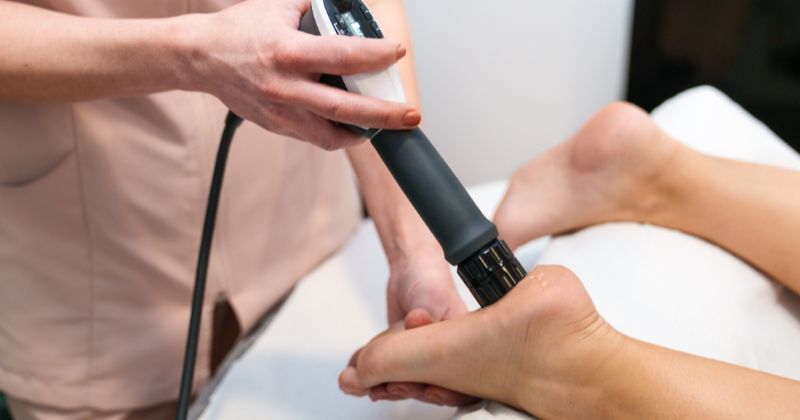
Now, shockwaves are high-energy acoustic waves applied externally. Think of them as small, controlled bursts that reach deep tissue without damaging the skin.
How exactly do they work? They stimulate local blood circulation and trigger natural healing processes. It's a bit like a wake-up call to tissues that have become chronically inflamed. The body responds by increasing blood flow and initiating more effective repair.
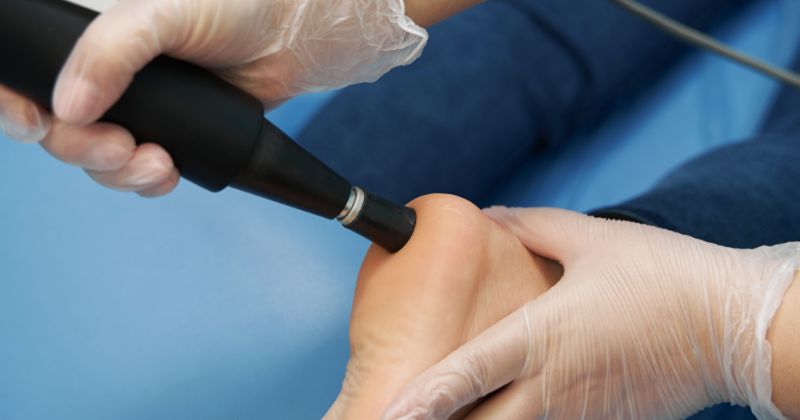
The beauty of shock waves is that they're completely non-invasive. No cuts, no general anesthesia. You lie down, the therapist places a probe on the painful area, and... off you go. You feel a series of small, rhythmic thumps. Some patients describe them as "hammering insides." A little uncomfortable, yes, but very bearable.
How effective are they? Truth be told, they work very well for heel spurs and plantar fasciitis. Not for everyone, of course, but for a good percentage of patients, yes.
The cost issue: let's do the math
Here's the question you all ask me: "Doctor, how much will it cost me?"
On average, a shock wave session for heel spurs costs between €150 and €250. It depends a lot on your location—in Milan, it might cost more than in a smaller city—and on the type of facility.
But be careful: one session is rarely enough. Usually, 3-5 sessions are needed, one per week. So the total bill can reach up to 750-1250 euros. That's not pocket money, I know.
Here at SmartHallux, we've managed to keep costs down while maintaining high treatment quality. How? By optimizing treatment pathways and reducing waiting times. Less bureaucracy, more efficiency. The result is that we can offer this service at more competitive rates without compromising on professionalism.
When it's time to think about shock waves

It's not like you immediately rush to apply shockwave therapy at the first twinge. You always try more conservative approaches first: rest, ice, anti-inflammatories, insoles, and stretching. They're the first line of defense.
Shockwave therapy becomes interesting when the pain persists for at least six months despite conservative therapies. Or when the pain is so severe that it seriously limits your quality of life. I've seen patients who couldn't walk or stand for more than a few minutes.
The typical symptoms that lead me to consider this treatment? Pain upon waking that improves with walking, pain after prolonged sitting, pain that worsens when barefoot or wearing shoes that are too flat. If this applies to you, shockwave therapy might be a good option for you.
The surgical alternative (which we prefer to avoid when possible)
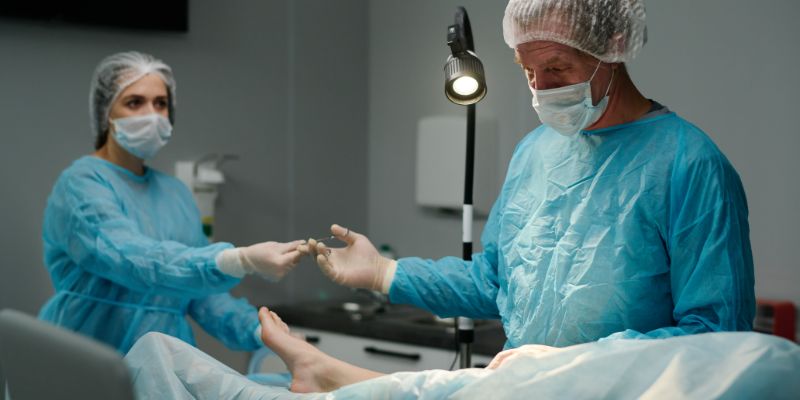
There is also a surgical option for heel spurs. The spur can be surgically removed or the plantar fascia released. We perform these procedures, of course, but we always prefer to try less invasive approaches first.
We reserve surgery for cases that are truly resistant to everything else. Because, yes, it works well, but it still requires anesthesia, has its risks, and requires a longer recovery time.
SmartHallux: Where we can help you

Here at SmartHallux, we specialize in foot and ankle surgery. Dr. Luigi Manzi, who has extensive experience in this field, provides each patient with a personalized treatment plan using the most modern techniques.
We have offices in several Italian cities and also offer telemedicine consultations for an initial assessment. The goal is always the same: to solve your problem as effectively as possible, with short wait times and low costs.
The SmartHallux team treats conditions such as hallux valgus , Morton's neuroma , and other deformities that cause foot pain. Providing comprehensive support throughout the treatment process, SmartHallux can be a winning choice for effective treatment tailored to your needs. Book your specialist consultation with the SmartHallux team now.
Questions you often ask me
But do shock waves hurt during treatment?
Let's just say it's no walk in the park, but it's no torture either. Most patients describe the sensation as uncomfortable but tolerable. Some feel a dull ache during the session, but it goes away quickly afterwards. Local anesthesia isn't necessary.
How many sessions are really needed?
It depends greatly on the individual case, but generally we're talking about 3-5 weekly sessions. Some patients begin to feel benefits after the second session, others need the full cycle. Patience is key.
How long does it take to see results?
It's not immediate. You usually notice the first improvements 2-3 weeks after completing the cycle. The maximum benefit is often achieved after 2-3 months. The tissues need time to "reorganize."