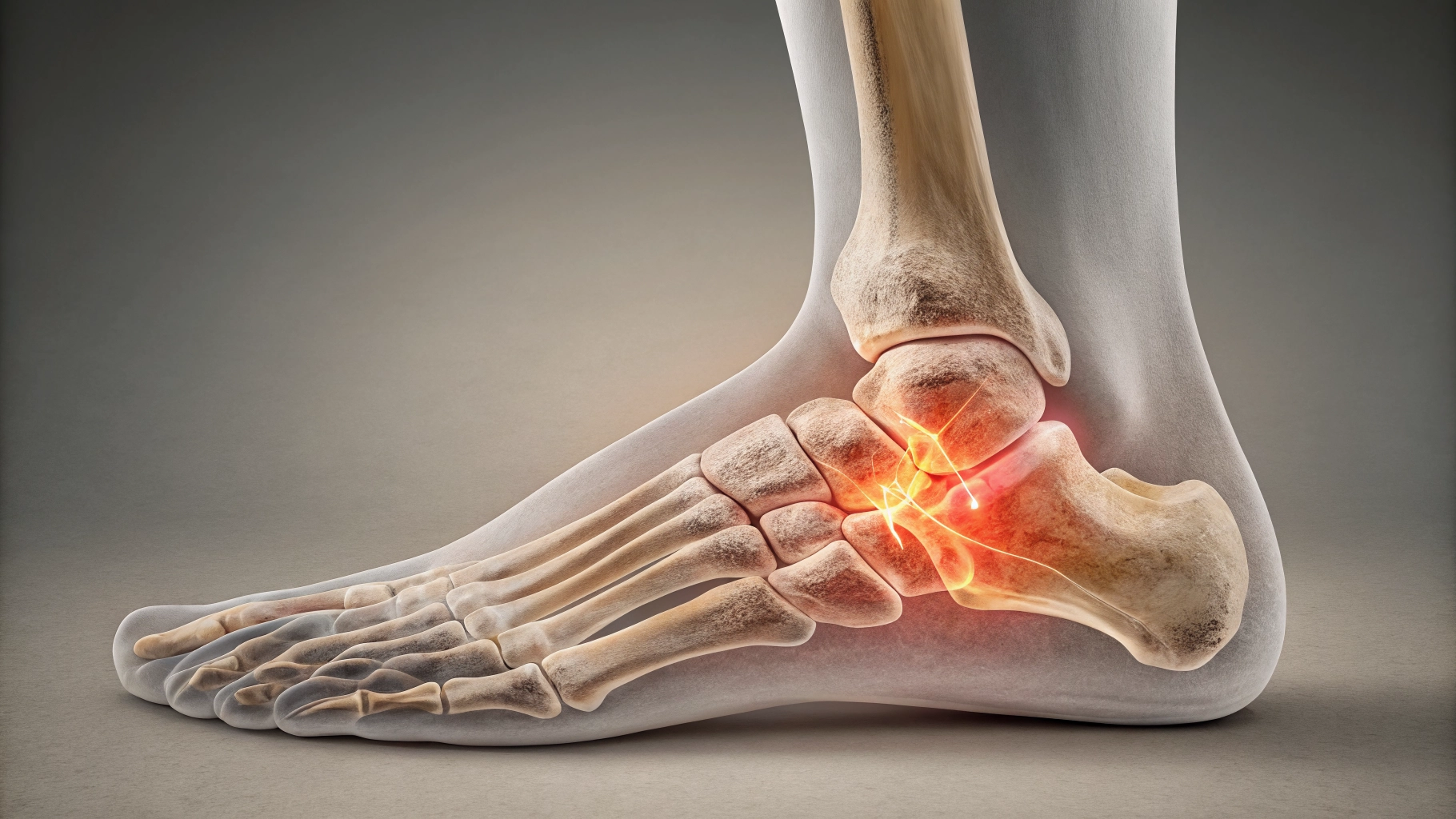

Does your ankle hurt? You're not alone.
Every day in my office I see patients who come in limping, often with that look on their face that says, "Doctor, I can't walk like I used to." And they're right to be concerned—the ankle is one of those joints that, when its balance is disrupted, can truly change your life.
Let's take a look at what can happen to this complex joint and, above all, how we can help you feel better. Because, after all, walking without pain should be the norm, not a luxury.
What Exactly Is Ankle Pathology?

When we talk about ankle conditions, we're talking about everything that can go wrong in this area. The ankle, for those who don't know, isn't "just" a joint.
It's a complex system. Bones, ligaments, tendons, muscles. They all must work in perfect harmony to allow you to walk, run, and jump. Think of a Swiss watch: if even one gear jams, the entire mechanism suffers.
The most common ankle conditions I see? Sprains that never fully heal, tendonitis that becomes chronic, arthritis that develops after seemingly trivial injuries. And then there are the foot problems that affect the ankle: bunions, flat feet, plantar fasciitis. It's all connected.
Why Did Your Ankle Decide to Hurt?

The causes are many, really many.
Trauma is the most obvious—you twist your ankle playing soccer, you stumble down a step, you take a nasty fall skiing. But it's not always so dramatic. Sometimes it's the silent overload: you run too much without proper training, you wear the wrong shoes for years, you have a job that keeps you standing all day on hard surfaces.
The other day, a woman who had been cleaning for thirty years came to me. “Doctor, my ankle has been hurting for months, but I don't remember ever injuring it.” That was a classic case of chronic overload—years of repetitive movements on hard floors, wearing unsuitable shoes.
And then there's osteoarthritis, which can develop even at a young age if you've had significant trauma. Congenital malformations like flat feet. Inflammatory diseases like rheumatoid arthritis or gout—which, by the way, can also affect the ankle, not just the big toe as many think.
The Signals Your Body Is Sending You

The symptoms of **ankle pathologies** are quite clear, once you know how to recognize them.
Pain is the first warning sign. It's not always the same—it can be sharp and stabbing when you move your ankle, or dull and constant even at rest. Many of my patients tell me, "Doctor, when I put my foot out of bed in the morning, it's hell."
Swelling often accompanies the pain. The ankle becomes larger, sometimes even visibly so. And be careful—if the swelling is asymmetrical (only on one side), it's always more concerning than if it's bilateral.
Stiffness is another significant symptom. You may notice that you can no longer bend your ankle as you used to, or that certain movements have become impossible. It's as if the joint has "rusted."
And then there's the instability—that feeling that your ankle isn't holding up, that it might give out at any moment. It's terribly annoying because it saps your confidence in walking.
Some patients also report strange noises—pops, creaks—when they move their ankle. These aren't always cause for concern, but they're worth getting checked out.
How Do I Know What's Really Wrong With You?

Diagnosing **ankle pathologies** is a bit like playing medical detective.
First, I listen to you. The history of your problem is crucial—when it started, how it started, what makes it worse, what makes it better. Then I examine you: I watch how you walk, check for swelling, assess joint mobility, and test ligament stability.
But often something more is needed. X-rays are the first step to seeing bones—fractures, signs of arthritis, deformities. MRI allows me to look inside: tendons, ligaments, cartilage. Ultrasound is perfect for soft tissue and has the advantage of being dynamic—I can see what happens as you move your ankle.
Sometimes blood tests are also necessary, especially if I suspect inflammatory diseases such as rheumatoid arthritis or gout.
The Treatment Options We Have Available

It all depends on what you have and how serious it is.
For many ankle conditions, conservative treatment works very well. Rest (that doesn't mean months of inactivity, mind you!), ice in acute phases, anti-inflammatory drugs when needed. And then physical therapy—which, in my opinion, is often underestimated but is essential for regaining strength, mobility, and proprioception.
There are also targeted injections that can provide relief in specific cases. Hyaluronic acid for osteoarthritis, corticosteroids for acute inflammation, and regenerative therapy with PRP (platelet-rich plasma) in certain cases.
But sometimes surgery is necessary. Ankle arthroscopy allows for the joint to be "cleaned," free cartilage fragments to be removed, and osteochondral lesions to be treated. For advanced arthritis, ankle replacements are available—a technology that has evolved dramatically in recent years.
What to Expect from Recovery

Every case is different, but I can give you some general guidance.
For a simple sprain, I typically see patients return to their activities in 4-6 weeks. For more complex problems, the timeframe can be longer. After surgery, allow at least 3-6 months for a full recovery, depending on the type of operation.
But be careful—recovery isn't just a matter of time. It's essential to follow the rehabilitation program, be consistent with physical therapy, and don't rush to return to sports if you're not ready.
I have seen too many patients ruin a good surgical result because they were in a hurry to start running or playing tennis too soon.
How to Prevent Ankle Problems

Prevention is always better than cure, as we doctors always say.
The right shoes are essential. I'm not just talking about expensive sneakers—I'm talking about footwear that's appropriate for what you do. If you work on your feet all day, you need shoes with good arch support. If you play sports, each discipline has its own specific needs.
Warming up before physical activity is essential. I've seen too many avoidable injuries in patients who started out cold for a run or a soccer game.
And then maintain a healthy body weight—every extra pound puts additional strain on your joints. Strengthen your ankle and calf muscles with specific exercises. Regular stretching helps maintain joint mobility.
SmartHallux: Where we can help you

Here at SmartHallux, we specialize in foot and ankle surgery. Dr. Luigi Manzi, who has extensive experience in this field, provides each patient with a personalized treatment plan using the most modern techniques.
We're not ones to force surgery—we believe in conservative treatment when possible, but when surgery is necessary, we have the experience and technology to give you the best possible results.
The SmartHallux team treats conditions such as hallux valgus , Morton's neuroma , and other deformities that cause foot pain. Providing comprehensive support throughout the treatment process, SmartHallux can be a winning choice for effective treatment tailored to your needs. Book your specialist consultation with the SmartHallux team now.
Questions you often ask me
Doctor, my sprain from six months ago still hurts. Is this normal?
It's not normal, but it's quite common. Often, "simple" sprains hide ligament or cartilage injuries that weren't diagnosed immediately. I recommend an MRI to see what's really going on.
What are the main ankle pathologies that you see in your practice?
The most common are chronic sprains, Achilles tendinitis, post-traumatic arthritis, and all the consequences of foot problems like bunions and flat feet. And lately, I've been seeing a lot of stress fractures in amateur runners.
How are ankle conditions accurately diagnosed?
Diagnosis is always based on three pillars: the medical history (what you tell me), the physical examination (the actual examination), and instrumental tests when necessary—X-rays, MRI, ultrasound. There's no single test that tells everything.
When is ankle surgery necessary?
When conservative treatment has failed and symptoms significantly interfere with quality of life, or in acute cases such as unstable fractures or complete ligament tears in athletes.