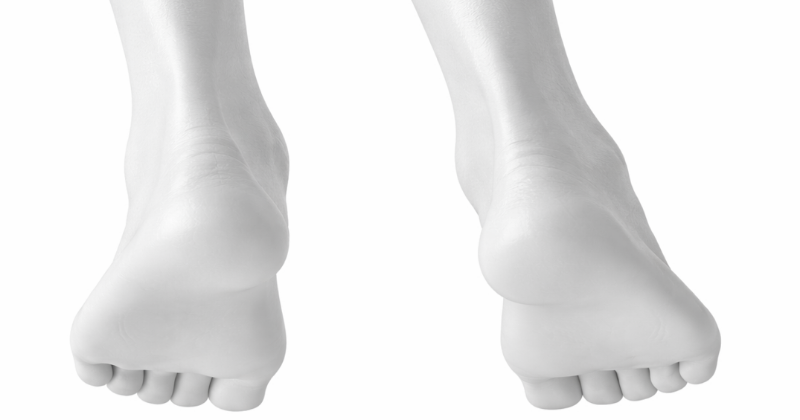
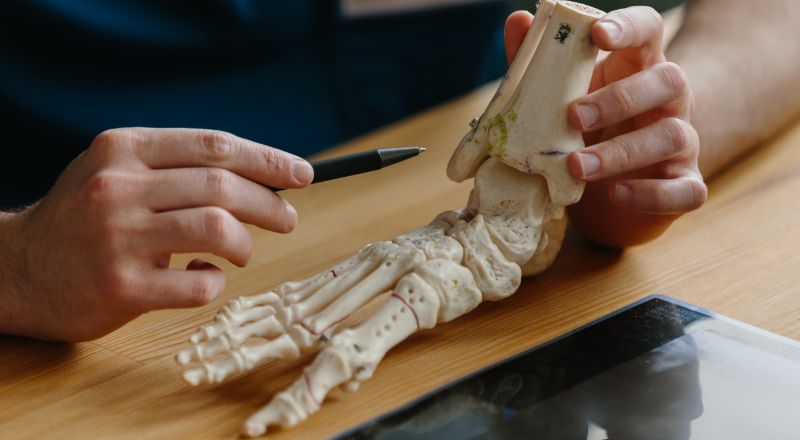
You may have looked at your feet and noticed that your big toe has taken a different path. Maybe it's sticking out toward the other toes, or it's become so stiff that walking becomes a problem. Welcome to the club of those who deal with bunions or hallux rigidus and can request a toe prosthesis.
These are more common problems than you might think. In my office, I see patients every day who come in limping, wearing shoes three sizes too big, or who have given up on heels altogether. "Doctor, I can't take it anymore," they often tell me. And I completely understand.
The big toe isn't "just" a toe. It's a fundamental part of our balance and movement system. When it hurts or malfunctions, the entire body suffers.
What happens when the big toe rebels?
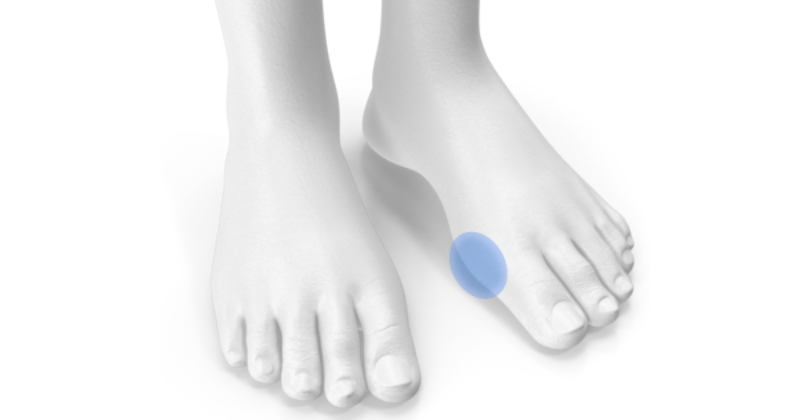
Hallux valgus is that deformity that makes the toe appear "crooked." That famous "bunion" that sticks out on the side of the foot. But beware: it's not just a cosmetic issue. Underneath that bump is a joint that's suffering, that gets inflamed, that cries out for help every time you put on a shoe.
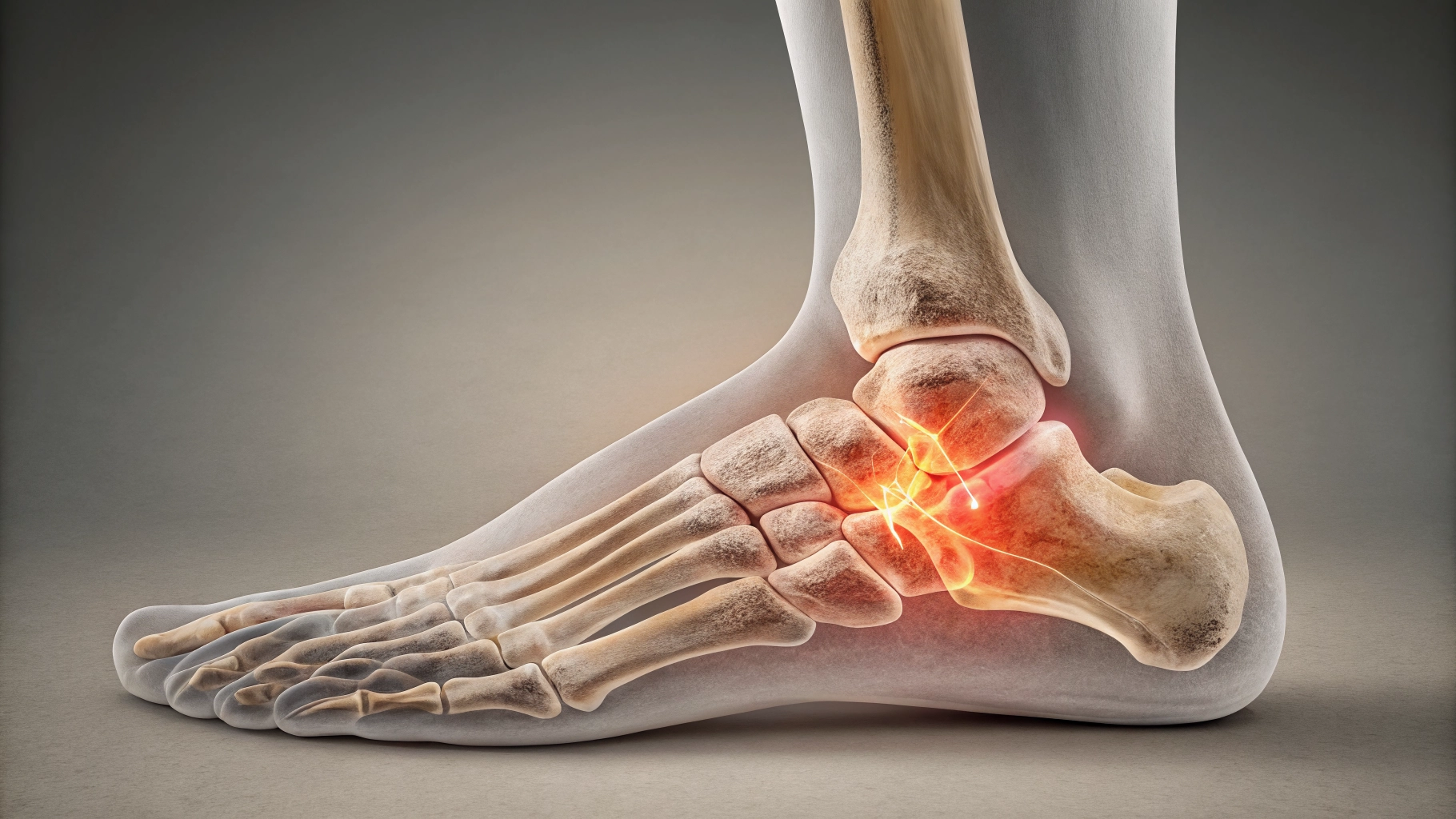
Hallux rigidus, on the other hand, is more subtle. From the outside, everything seems normal, but when you try to bend the toe... nothing. It's as if it's stuck. It's osteoarthritis affecting the metatarsophalangeal joint, the one that allows us to "push" when we walk.
I've had patients tell me they've tried everything: insoles, anti-inflammatory drugs, physical therapy. And these things often help, especially in the initial stages. But when the situation is compromised, when the joint is already damaged, you need to consider more permanent solutions.
Why does this happen? There are various causes.

There's no single cause. It's a bit like asking why I get a headache—there could be many reasons.
Genetics plays a major role. If your mother or grandmother had big toe problems, you've probably inherited the foot shape that predisposes you to these problems. It's no one's fault; it's just how we are made.
The wrong shoes are another factor. Years and years of wearing tight shoes, high heels, and overly tapered toes. The foot adapts, but at some point it takes its toll. That's why I see more women than men with these problems—though men aren't immune, especially those who work in jobs that put stress on their feet.
Sometimes rheumatoid arthritis or other inflammatory diseases damage the joints of the foot. In these cases, the problem is systemic, not local.
How to recognize the problem

Pain is the first warning sign. It's a pain that worsens when walking, especially in the morning when you put your feet down. Some patients describe a feeling of "stiffness," as if the joint were rusty.
Difficulty finding shoes that don't hurt is another sign. When you start buying only comfortable, loose-fitting shoes, perhaps even a little ugly but still comfortable, it's time to see a specialist.
In more advanced cases, the deformity is also visible. The big toe shifts, pushing against the second toe, forming the lateral protuberance characteristic of hallux valgus.
The diagnosis: what do I look for during the visit?

When you come into my office, the first thing I do is watch how you walk. Yes, even as you enter the room, I'm observing your gait. It's amazing how much information can be gleaned from the way a person places their feet.
Then I examine the foot: the shape, the flexibility of the big toe, and where it hurts the most when I press down. I also check the other toes, because bunions often cause cascading problems throughout the foot.
X-rays are essential. They show the angle of deviation of the big toe, the condition of the joint, and whether there is any arthritis. In some cases, a CT scan may also be necessary to better visualize the bone details, especially if we are planning surgery.
Treatment options: from shoes to prosthetics

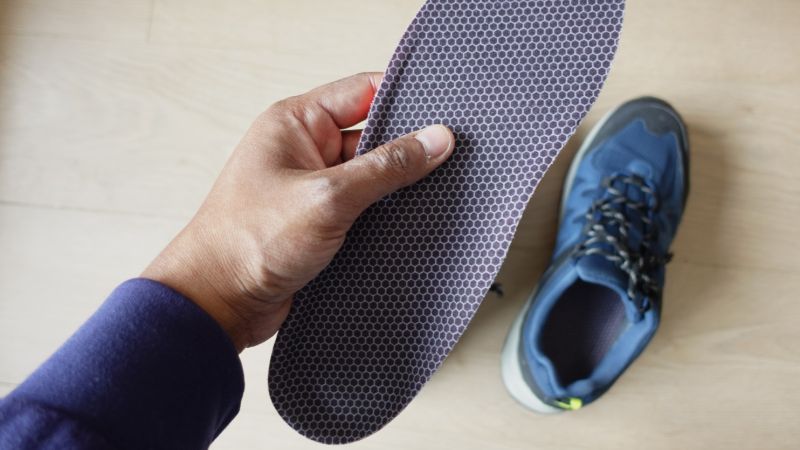
For less severe cases, there are many things that can be done without surgery: custom-made insoles that redistribute the load, anti-inflammatory medications to manage the pain, and physiotherapy to maintain residual mobility.
But when the joint is severely damaged, when the pain persists despite all conservative treatments, surgery is necessary. This is where big toe prostheses come in.
A hallux rigidus prosthesis, in particular, can be the ideal solution when the metatarsophalangeal joint is completely damaged by arthritis. This procedure replaces the damaged joint with an artificial one, restoring movement and relieving pain.
Modern prosthetics are made of sophisticated materials: ceramic, titanium, and polyethylene. Each has its own characteristics and is chosen on a case-by-case basis. There isn't a "one" perfect prosthetic for everyone—there's just the right one for every patient.
How the intervention works

Toe replacement surgery is performed as an outpatient procedure, under local or spinal anesthesia. It lasts about an hour and a half. Through a small incision, I remove the damaged joint and position the prosthetic components.
I won't deny that this is a delicate procedure. We're working on small structures that are crucial for movement. That's why it's important to rely on surgeons who specialize in foot surgery.
There are risks, as with any procedure: infection, healing problems, residual stiffness. But in my experience, when the indication is correct, the results are very satisfactory.
Recovery: patience and perseverance
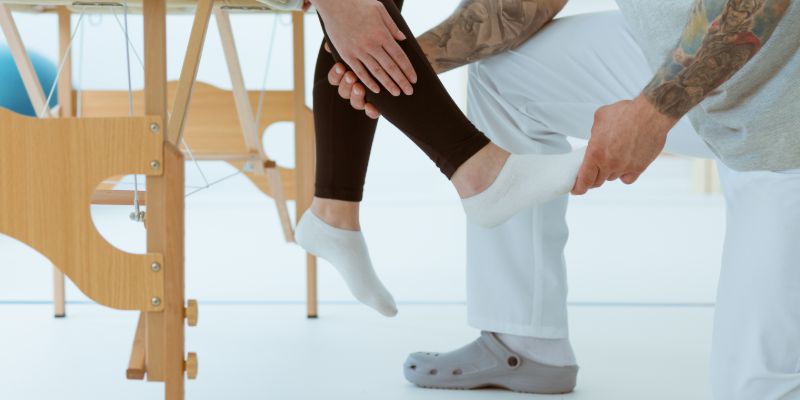
After surgery, you'll need to wear a special shoe for a few weeks. This shoe has a rigid sole that protects the operation while the tissues heal.
Physiotherapy is essential. It begins just a few days after surgery with gentle exercises to maintain mobility. It then gradually intensifies to regain strength and coordination.
Recovery times vary from person to person. Generally, after 6-8 weeks, you can return to normal shoes, and after 2-3 months, to light sports activities. Each case is different, and it's important not to rush.
SmartHallux: Where we can help you

Dr. Luigi Manzi, who has gained specific experience in this field, follows each patient with a personalized treatment plan using the most modern techniques, including our SmartHallux technique for hallux valgus and hallux rigidus.
<strong>The Eurobursar</strong> SmartHallux deals with pathologies such ashallux valgus, Morton's neuroma and other deformities that cause foot pain. Providing comprehensive support throughout the treatment process, SmartHallux It can be a winning choice to obtain an effective treatment targeted to your needs, book now your specialist visit with the SmartHallux team.
Each big toe prosthesis is chosen and customized based on the patient's specific needs, considering age, activity level, functional and aesthetic expectations.
FAQ
Doctor, does a prosthetic toe last forever?
Modern prostheses have an average lifespan of 15-20 years, sometimes even longer. This depends on many factors: your weight, how much you walk, and your activity level. In any case, even if a revision is needed, current techniques allow for it.
Will I be able to play sports again?
In most cases, yes, although you have to be realistic. High-impact sports like running may not be ideal, while swimming, cycling, and golf are generally well tolerated. It depends a lot on the individual case.
Can I feel the prosthesis when I walk?
At first, you may feel a sense of "differentness," but in most patients, this sensation disappears over time. The goal is for you to forget you have it.