
Surgery for pronated valgus foot
Let's take a closer look at pronated valgus foot surgery, from pre-operative indications to post-operative recovery.
By Dr. Luigi ManziUpdated on
Among the various foot and ankle pathologies that negatively affect the lives of those who suffer from them, there is pronated valgus foot.
Characterized by an inward deviation of the heel , a pronated foot causes not only pain and mobility difficulties, but also incorrect foot posture that also affects the rest of the body.
When conservative remedies and daily precautions fail to resolve or prevent this problem, doctors recommend surgery.
Let's take a closer look at the procedure for pronated valgus foot , from pre-operative indications to post-operative recovery.
What is Pronate Valgus Foot?
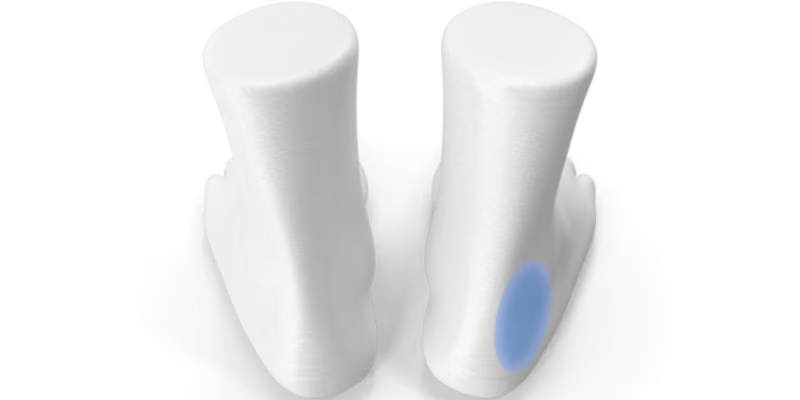
When the heel tilts outwards and the arch of the foot is significantly lowered , valgus pronation develops.
Visually, this pathology presents itself with the obvious inward inclination of the foot.
Genetic causes, injuries and traumas , congenital anomalies and bad daily habits are the main causes that can develop this pathology.
Pronation of the foot, in addition to pain , swelling and mobility difficulties , can alter and compromise the posture of the foot which can also damage the ankles and knees.
Incorrect posture , in the long run, causes other physical problems that make this pathology truly debilitating.
Just when the patient's health is compromised and there seems to be no way out, it is advisable to resort to surgery.
Initial indications for pronated valgus foot surgery

Once pronated valgus foot has been diagnosed and after evaluating and deciding whether to undergo surgery, specific instructions must be followed to best approach the operation.
Once you have chosen the surgery you want to undergo, under the strict advice and guidance of the doctor you have turned to, you will have to follow various phases.
Pre-operative preparation
To ensure the success of the intervention, the following steps must be followed:
- Pre-Operative Exams: to always evaluate the patient's condition, it will be necessary to undergo further blood tests and electrocardiograms.
- Drug withdrawal: some of these, such as anticoagulants and anti-inflammatories, should be stopped before the operation; it is always up to the doctor to provide the precise list of when and which drugs to stop.
- Pre-operative fasting: the patient will not be able to drink or eat at least 8 hours before surgery.
- Support immediately after surgery: it will be necessary to organize the transportation for the day of surgery and the return home, contacting a specialist or talking to family and friends; organizing initial assistance after the surgery is also important.
- Home Preparation: need organize your home environment to prepare for the post-operative recovery period; this may include both organizing space in the house, which includes equipping yourself with tools useful for recovery such as crutches or walkers.
By following these post-operative indications , it is the patient himself who can contribute to the success of the surgery and facilitate post-operative recovery.
Types of Surgical Intervention for Pronate Valgus Foot
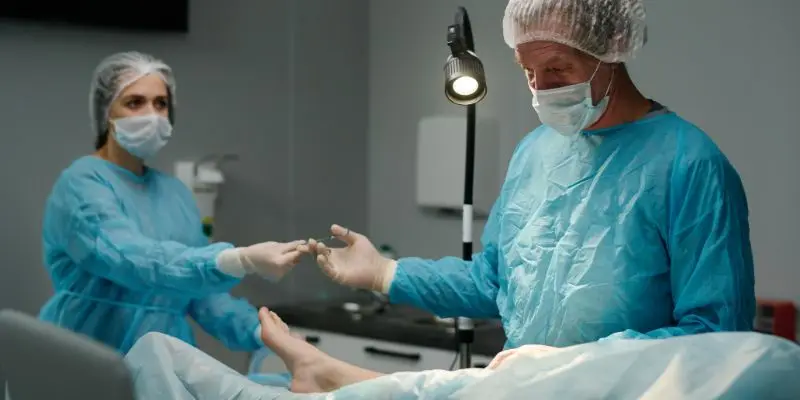
By evaluating the state of the disease, the patient's expectations, and their general health, the doctor will evaluate and recommend the type of intervention to choose.
Among the most common and chosen options are:
- The osteotomy: which consists in the repositioning of the bones of the foot, and serves to correct the alignment of the arch of the foot and the heel;
- The arthrodesis: fusion of one or more joints of the foot to stabilize the bone structure and reduce pain;
- Transposition of the tendons: a procedure involves moving the tendons to improve muscle function and alignment of the foot;
- The insertion of implants: which can be inserted into the foot to support the arch and correct abnormal alignment;
- Soft tissue repair: like ligaments and tendons, their repair improves the stability and function of the foot.
- Removal of accessory bones or bony protrusions: can help restore foot alignment since, in some cases, the presence of accessory bones can contribute to pronation of the foot.
The Recovery and Rehabilitation Process

As with all procedures, the post-operative recovery period varies depending on the severity of the condition, the patient's approach, and the type of surgery undergone.
As with the pre-operative period, the post-operative period also has several phases that must be managed under the guidance of a doctor.
Immediately after surgery, the patient must rest as much as possible , and the foot must be immobilized with a bandage or cast. The patient should not put any weight on the foot to protect the new bone structure.
The rest period is followed by rehabilitation , the crucial phase of recovery.
During rehabilitation, the patient will need physical therapy to help restore foot mobility. Physical therapy exercises include stretching, balance training, and muscle strengthening.
After physiotherapy , which lasts depending on the patient's condition, you can gradually return to your daily activities , always following your doctor's instructions. This return to daily life also involves adopting new habits.
As we return to our daily lives, it's important to learn how to maintain healthy feet every day . For example, wearing appropriate, comfortable shoes and maintaining a balanced body weight are two excellent ways to maintain healthy feet and ankles.
Treating pronated valgus foot: why choose SmartHallux?

If you suffer from pronated valgus foot and don't know who to turn to, SmartHallux is the best choice you can make.
SmartHallux, in fact, stands out for its advanced technology and the team of expert and professional surgeons led by Dr. Luigi Manzi , an internationally renowned surgeon.
The SmartHallux 3D diagnostic system offers the advantage of a highly accurate and rapid assessment of foot deformity. This allows for personalized surgical interventions to be planned well in advance and with precision.
The rehabilitation offered by SmartHallux is also highly innovative and functional. In addition to being personalized, SmartHallux rehabilitation programs integrate physiotherapy and customized orthotics, as well as comprehensive support from specialists throughout the rehabilitation process.
Choosing SmartHallux means relying on a safe, complete and innovative solution , designed to improve the quality of life of patients with pronated valgus foot.
What are you waiting for? Book your appointment with SmartHallux . Just click here and choose the option that best suits you.