
Calcific iliac enthesitis: When hip pain doesn't give you peace of mind
Calcific iliac enthesitis is inflammation with calcium deposits where tendons attach to the hip bone, causing deep groin or buttock pain. Causes and treatment.
By Dr. Luigi ManziUpdated on
Do you ever feel a nagging pain in your groin or side? Perhaps it gets worse when you climb stairs or get out of bed in the morning? It could be calcific iliac enthesitis, a condition I see quite often in my office and which, I must say, is often underestimated or misdiagnosed.
Calcific iliac enthesitis isn't exactly the simplest name in the world, I admit. But in this article, I'll try to explain everything clearly, as I always do with my patients.
What is this calcific iliac enthesitis?
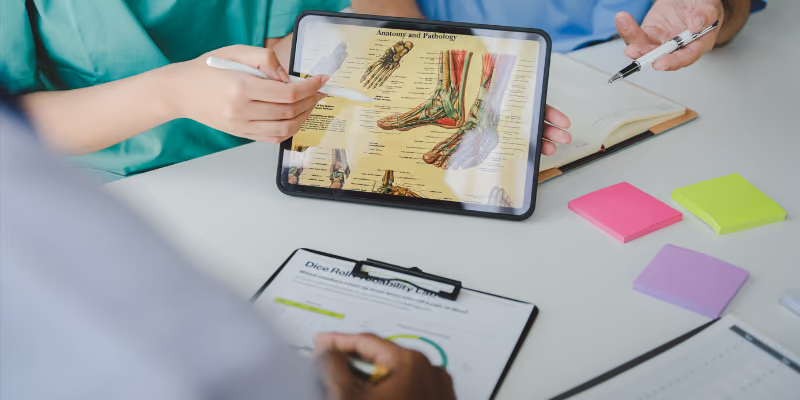
Let's start with the basics. **Calcific enthesitis** is essentially an inflammation that affects the entheses—the points where tendons attach to bones. In the specific case of iliac calcific enthesitis, we're talking about the area where the tendon of the iliopsoas muscle inserts onto the ilium, in the hip region.
What happens, in simple terms, is that calcium deposits form in this area. Think of these deposits as small pebbles that lodge in the tendon. They're not dangerous in themselves, but they can cause significant discomfort and limit movement.
**Insertional calcific enthesopathy** – this is the more technical term – can develop for various reasons. It is often related to functional overload, but not always.
Why does this enthesopathic calcification occur?
Well, this is one of the questions I get asked most often. The truth is, there's no single, precise cause. After all, the human body is complex, and enthesopathic changes often develop due to a combination of factors.
Overuse is certainly one of the main causes. If you play intense sports, run a lot, or perhaps have a job that requires you to stand for hours, the tendon can "protest" by forming these calcifications. I've seen many runners with this problem, for example.
But it's not just a matter of physical activity. Trauma can also trigger a process of **degenerative enthesopathy**. A blow, a fall, even events that seem insignificant at the time can trigger this reaction in the body.
And then there's age. As we age, tissues change. **Calcific enthesopathies** are more common after age 40-45. This isn't a fixed rule, mind you—I've even seen young athletes with this problem—but age plays a significant role.
Genetic predisposition? Likely. Some people seem more prone to developing **enthesopathic calcifications**. If there's a family history of tendon problems, you may be at higher risk.
The symptoms you need to recognize
Pain is the main symptom. But not just any pain.
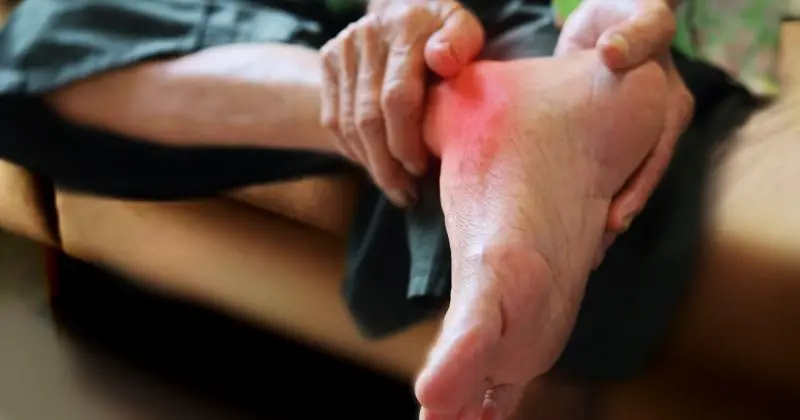
My patients with **calcified enthesitis of the hip** often describe pain that begins in the groin and can radiate to the anterior thigh or hip. It's a specific pain, often worsened by certain specific movements: climbing stairs, getting up from a sitting position, or doing sit-ups.
Morning stiffness is another typical sign of calcific hip enthesopathy. You wake up and have difficulty moving normally for the first few minutes. Then, as you warm up, things improve a little.
Some patients also report muscle weakness, especially when they have to flex their hip against resistance. And there's often pain when palpated in the affected area—pressing with your fingers in the right spot triggers discomfort.
An interesting thing about **calcareous enthesopathy** is that the pain can be intermittent. There are periods when it feels better and other times when it gets worse, often for no apparent reason.
How do we diagnose?

When a patient comes to me with these symptoms, I always start with a detailed medical history. I want to know everything: when the pain started, what makes it worse, what makes it better, any trauma, what type of physical activity you do.
Then comes the physical examination. I check the hip's movements and do some specific tests to see if I can reproduce the pain. Sometimes just pressing the right spot confirms the suspicion of calcific enthesitis.
But to be sure, instrumental tests are needed. X-rays are often the first step—they can reveal calcifications if they're evident enough. Ultrasound is very useful for viewing the soft tissue and assessing the condition of the tendon.
In doubtful cases, MRI provides detailed information on everything: tendon, bone, and surrounding tissue. It's the most comprehensive test for this type of problem.
The treatment options we have
The good news is that **enthesopathy cures** often responds well to conservative treatment. A scalpel isn't always necessary, in fact.
Relative rest is essential, at least initially. It doesn't mean staying still, but avoiding activities that trigger the pain. If you run every day, perhaps swimming or cycling for a while is better.
Anti-inflammatory medications can help control pain and inflammation. But be careful: they're not a permanent solution; they're just a way to manage symptoms while we address the underlying cause.
Physiotherapy is often the key. Specific exercises to stretch and strengthen the hip muscles, manual techniques, and sometimes physical therapies like ultrasound or tecar therapy. I've seen excellent results with a targeted physiotherapy approach.
In some select cases, we can consider cortisone injections or, more recently, stem cell treatments. These are options I reserve for specific situations, after having explored other approaches.
Surgery? It's possible, but only in very specific cases that are resistant to all other treatments. It's not the first choice for this type of peripheral enthesopathy.
What to expect during recovery

Recovering from **calcified enthesitis** requires patience. It's not a problem that can be solved in a week; you need to know this from the beginning.
I usually see initial improvements after 3-4 weeks of appropriate treatment. The pain begins to subside, and movement becomes easier. However, full recovery can take 2-3 months, sometimes longer.
The journey isn't always linear. There are better days and worse days. This is normal; it's part of the healing process for **calcific enthesopathies**.
One important thing: even when the pain subsides, you need to continue with maintenance exercises. The tendon has a memory, and if you immediately return to your old bad habits, the problem may recur.
Prevention is better than cure

There are some things you can do to reduce your risk of developing **enthesopathic** problems.
Warming up before physical activity is essential. Never start a workout cold. Stretching afterward is equally important.
Vary your activities. If you're always running, try swimming, cycling, or yoga. This helps you avoid overloading the same areas.
Listen to your body. If you feel pain, don't ignore it and hope it will go away on its own. Often, a few days' rest can prevent more serious problems.
SmartHallux: Where we can help you

Here at SmartHallux, we specialize in foot and ankle surgery. Dr. Luigi Manzi, who has extensive experience in this field, provides each patient with a personalized treatment plan using the most modern techniques.
We work with a multidisciplinary approach, collaborating with specialized physiotherapists and using innovative techniques such as stem cell treatments when necessary.
The SmartHallux team treats conditions such as hallux valgus , Morton's neuroma , and other deformities that cause foot pain. Providing comprehensive support throughout the treatment process, SmartHallux can be a winning choice for effective treatment tailored to your needs. Book your specialist consultation with the SmartHallux team now (opens in a new tab).
Questions you often ask me
Doctor, is calcific iliac enthesitis dangerous?
No, it's not dangerous in the sense that it doesn't pose a risk to your overall health. It's annoying, can limit movement, and affects your quality of life, but it's not a serious condition. With the right treatment, it resolves well in most cases.
How long does it take to fully heal?
It depends on many factors: how long you've had the problem, your age, and the type of activity you do. On average, full recovery takes 2-3 months, but every case is different. Patience is key in these processes.
Should I stop exercising forever?
Absolutely not. You'll need to temporarily modify your activities during the acute phase, but the goal is always to get you back to everything you did before. In fact, patients often come back stronger than before because they learn to move better.