
Enthesopathy: a complete guide
Enthesopathy is a disorder of the enthesis, the point where a tendon or ligament attaches to bone. What it means, the causes, symptoms and how it is treated.
By Dr. Luigi ManziUpdated on
Enthesopathy is a disease that affects the intersections between tendons and ligaments of bones.
This condition can affect multiple parts of the body, and one of the most debilitating types involves the junction between the Achilles tendon and the heel.
Enthesopathy is often underestimated, but there is no doubt that if not treated properly, it can significantly impact the mobility and life of those who suffer from it.
In this article we will focus on enthesopathy which mainly affects the feet and ankles.
What is enthesopathy?

As already mentioned, enthesopathy affects those points where the tendons and ligaments insert into the affected bone.
This condition develops when these intersecting areas become inflamed or deteriorate. This condition, in addition to causing very sharp pain, impedes normal mobility of the affected area.
Enthesopathy can affect different parts of the body: from the shoulders to the pelvis and from the hands to the feet.
Types of Enthesopathy
Since it is a pathology that can affect different parts of the body, due to the cause, there are different types of enthesopathy.
These different types of enthesopathy are named according to the part of the body affected.
For example, epicondylitis is the type of enthesopathy that affects the elbow, while Achilles enthesopathy is the one that affects the Achilles tendon.
Enthesopathy that specifically affects the heel is called plantar enthesopathy or, more commonly, heel spur, while the one that affects the knee is patellar enthesopathy.
The causes and risk factors of enthesopathy
Enthesopathy has several causes and risk factors that can contribute to its development.
Among the most common causes, often responsible for developing other pathologies, there are:
- autoimmune diseases;
- genetic predisposition;
- diabetes and other diseases related to metabolic disorders;
- infections of the affected parts;
- trauma and injuries.
As for the risk factors , however , these depend largely on incorrect attitudes and habits attributable to the lifestyle of the affected person or to the inevitable aging of the body.
Among the risk factors for enthesopathy, therefore, it is worth mentioning:
- incorrect posture;
- wrong movements often repeated and underestimated;
- intensive and excessive sports training;
- aging.
Symptoms of enthesopathy

To recognize enthesopathy it is necessary to know how it can manifest itself, that is, through the symptoms.
The symptoms of enthesopathy vary, depending on the part affected by the pathology and its state and severity.
In general, however, we can list some recognizable and common symptoms that, for better or for worse, appear in almost all types of enthesopathy.
Let's see, therefore, what are the most common and widespread symptoms of enthesopathy :
- swelling: concentrated especially in the part affected by enthesopathy;
- pain: sharp and stinging in the affected part, especially during movements that involve it;
- impaired mobility: pain and swelling, by force of cause, limit the movements of the part affected by the pathology;
- joint stiffness: felt after long periods of inactivity, such as upon waking up.
What's interesting to know about the symptoms of enthesopathy is that they can appear gradually or intermittently and can therefore be misleading for those affected. One factor to consider when trying to recognize these symptoms is the intensity of the pain , which, while bearable, can become acute and severely debilitating.
Diagnosis of enthesopathy
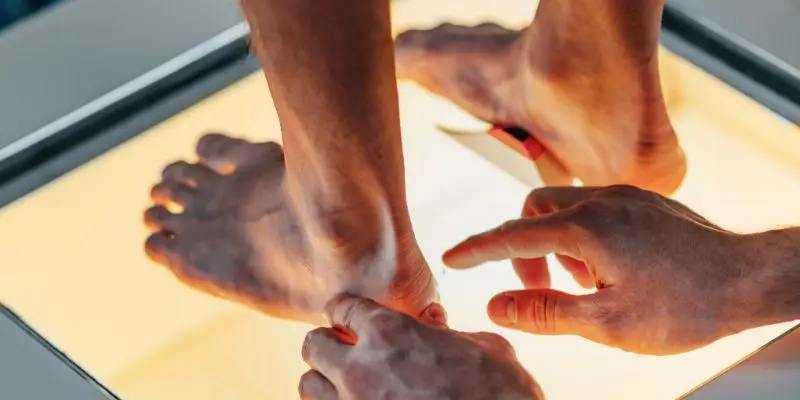
Once you recognize the symptoms and establish that there may be a problem, you will need to contact a specialist doctor and obtain an accurate diagnosis as soon as possible.
The diagnostic test for enthesopathy is not much different from any other test for the detection of joint and muscle pathologies.
The doctor you see will first perform a thorough physical examination , analyzing the affected area to assess the symptoms (swelling and pain) and also check mobility.
After studying the patient's medical history , it's usually necessary to perform imaging tests , such as ultrasounds, X-rays, and MRIs. The images produced by these tests will help both accurately assess the internal condition of the affected area and rule out other pathologies and obtain a definitive diagnosis.
More unusual, but still likely, are blood tests used to monitor and identify indicators of inflammation.
Only an accurate, early diagnosis can give the affected person the opportunity to act in time and begin treating enthesopathy before it worsens and the situation degenerates.
The probable complications of enthesopathy
The importance of obtaining an early and accurate diagnosis, therefore, is the only thing that allows for rapid intervention on the pathology.
However, enthesopathy is often underestimated and not treated properly. This is when various unpleasant complications can arise.
Let's now look at the most common complications that can affect a person suffering from enthesopathy, if it is underestimated or not treated adequately.
One of the most impactful symptoms of enthesopathy is a reduction in mobility ; this can go from a simple reduction to a real loss of functionality , permanently compromising the normal mobility of the affected part.
One of the most common complications is the formation of calcifications , or calcium deposits in the area where ligaments and bones meet; calcifications, in addition to causing stiffness of movement, also cause annoying chronic pain.
Both symptoms and complications, when interrelated, increase the risk of secondary injuries . Indeed, once the area affected by enthesopathy is weakened and unable to perform its mobility functions, the stress and pain affecting all surrounding areas can promote further trauma.
Enthesopathy and its complications can seriously compromise the quality of life of those who unfortunately suffer from it.
SmartHallux: the solution for enthesopathy

If you suffer from enthesopathy and don't know who to turn to, SmartHallux is the solution you've been looking for.
A renowned center specializing in the treatment of foot and ankle conditions, SmartHallux has developed innovative, minimally invasive surgical techniques to also treat enthesopathy.
Thanks to the expertise and professionalism of the entire team of specialists, led by Dr. Luigi Manzi , SmartHallux offers its patients studied and personalized treatments, aimed at destroying the pathology and reducing recovery times.
The strength of SmartHallux lies in combining a highly technical and innovative approach with an approach totally dedicated to the needs and expectations of each type of patient.
Don't wait any longer and book your SmartHallux visit now.
Click here and choose how, where, and when to visit a SmartHallux specialist.