
When to Operate on Hallux Valgus: When Is the Right Time?
Have you ever wondered whether big toe pain can be solved with an insole or whether surgery is necessary? Find out in "Bunion: When Should You Operate?"
By Dr. Luigi ManziUpdated on
Have you ever wondered if that increasingly cumbersome and painful big toe discomfort can be solved with a simple insole, or if it's time to seriously consider surgery? Hallux valgus , with its characteristic deviation of the big toe toward the other toes, is one of the most common foot conditions. Yet, many people tend to postpone the decision to have surgery until the pain or difficulty walking becomes unbearable.
What is hallux valgus and why does it appear?
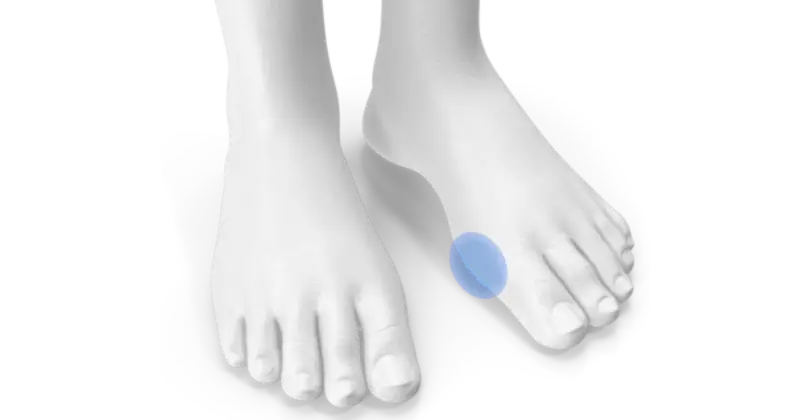
Hallux valgus isn't just an aesthetic problem. It's a true joint deformity that affects the metatarsophalangeal joint of the big toe. The causes? They can be genetic, postural, tied to wearing tight or high-heeled shoes, but also to conditions like flat feet or ligament laxity.
Over time, the joint becomes inflamed, swollen, and the pain may extend to the sole of the foot or involve the other toes.
Non-surgical treatments: do they always work?

In the early stages, a conservative approach can be attempted. Comfortable shoes, orthopedic insoles , anti-inflammatory medications, and night splints can reduce pain and slow the progression of the deformity.
However, it's important to understand that these remedies do not correct the deviation . They are useful palliatives when the disorder is mild or the patient is not yet ready for surgery. However, when the pain persists and quality of life suffers, it's time to consider a more definitive option.
When should hallux valgus be operated on?

There is no fixed age or rule. Surgery is recommended when:
- The pain is chronic and constant, even at rest
- Walking or wearing shoes becomes difficult
- The deformity visibly worsens
- They manifest themselves secondary problems: hammer toes, metatarsalgia, calluses, arthrosis
- The patient also wants improvement aesthetic, if the deviation is very evident
Surgical techniques: they are not all the same
Today, there are several surgical techniques available to treat bunions. Some are minimally invasive, requiring small incisions and short recovery times; others are more traditional, indicated for complex cases or those with significant deformities.
The choice depends on the severity, the patient's age, the type of foot, and any associated pathologies. It's essential to rely on an experienced surgeon who can recommend the most appropriate procedure, without standardizing treatment.
Post-op: what to expect
After surgery, the foot is treated with medication and protected with a post-operative shoe. Walking is possible immediately, with some precautions, but full recovery takes 6-12 weeks.
During recovery, it is important to follow a personalized rehabilitation program to avoid stiffness, strengthen muscles, and gradually return to your activities.
Complications? They may include prolonged pain, swelling, or rarely, recurrence of the deformity. But if the surgery is performed well and the patient follows post-operative instructions, the long-term results are excellent.
Why choose SmartHallux

SmartHallux , led by Dr. Luigi Manzi, offers an innovative and customized approach to correcting hallux valgus. It uses modern, minimally invasive techniques, achieving excellent functional and aesthetic results, and offers a rapid service , also in partnership with specialized clinics in Milan, Rome, and Naples.
The SmartHallux team treats conditions such as hallux valgus , Morton's neuroma , and other deformities that cause foot pain. Are you experiencing persistent pain or is your big toe deformity getting worse? Book (opens in a new tab) your specialist consultation with the SmartHallux team now . Together, we'll determine the best solution for you.
FAQ
When should hallux valgus be operated on?
When the pain is constant and limits daily activities, or when the deformity is evident and worsening.
How long does recovery take?
On average, it takes 6 weeks to return to normal walking, but for some activities it may take 2-3 months.
Is the surgery risky?
It is a safe procedure, but like any surgery it carries small risks such as infection, swelling or recurrence.