
Achilles Tendon Surgery: What to Expect and How to Prepare
Achilles tendon surgery: when it is necessary, how to prepare in the weeks before, what happens on the day and what to expect in early recovery.
By Dr. Luigi ManziUpdated on
The Achilles tendon is the strongest and largest tendon in the human body, as it connects the calf muscles to the heel bone.
Essential for walking, running, and jumping, the strength of the Achilles tendon, however, does not make it immune to injury and disease.
A rupture of this tendon , in fact, can occur suddenly and often requires surgery to restore full functionality of the leg, especially the ankle.
In this article, we will analyze together the Achilles tendon surgery , the steps involved and the expectations for rehabilitation and recovery.
Causes and Symptoms of Achilles Tendon Rupture

Achilles tendon rupture is often caused by sudden trauma , such as overload during intense physical activity, or by simple chronic degeneration.
Sports such as basketball, football and tennis , given the effort and intensity of pressure they exert on the Achilles tendon, are often recognised as activities that can put it at risk and lead to injury.
But how can you tell if your Achilles tendon has been damaged or not?
There are several symptoms that can help you understand if you suffer from this pathology.
Among the most common and widespread symptoms are:
- difficulty walking than to stand on tiptoe;
- a sudden, severe pain in the back of the leg or ankle;
- a strange sensation of fragility, similar to a bursting, in the affected part;
- presence of bruises and swelling.
Diagnosis and Preparation for Achilles Tendon Surgery
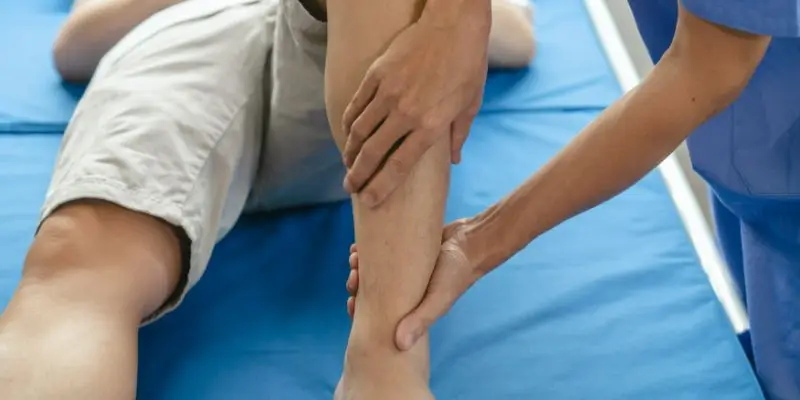
Diagnosing an Achilles tendon rupture is crucial, not only to be aware of the problem, but above all to resolve it promptly and appropriately.
We obviously start with a physical examination , during which the doctor checks the functionality of the tendon and the possible presence of a palpable gap.
Ultrasound or MRI scans are often useful to confirm the diagnosis and assess the extent of the damage.
Once the diagnosis is confirmed, the doctor should explain, discuss and recommend treatment options to the patient.
When the disease mainly affects young and active patients , doctors tend to recommend surgery.
If you are going to proceed with surgery, you will need to prepare properly first.
Preparing for Achilles tendon surgery includes several fundamental and essential steps.
You will need to stop taking any anticoagulant medications and begin fasting preoperatively the night before. A crucial step in successfully navigating the procedure is mental and logistical preparation for the postoperative period and rehabilitation.
A Focus on the Surgical Procedure

Achilles tendon surgery is not a single procedure; rather, it involves various techniques, chosen depending on the condition of the affected area, the surgeon's preferences, and the patient's needs.
The two main techniques are the open approach and the minimally invasive approach.
The open approach involves making an incision along the back of the ankle to expose and operate on the torn tendon. The ends of the tendon are fused together , and in some cases, a tendon graft may be necessary to further strengthen the repair.
The minimally invasive approach , on the other hand, involves making smaller incisions and then using specialized, cutting-edge instruments to address the problem. This type of surgery is often preferred to the open approach because it reduces the risk of infection and speeds up the healing process.
Generally, both operations last around 30-60 minutes . What differentiates them, aside from the method, is the recovery time and the risk of complications.
The open approach , in fact, has longer recovery times and a higher risk of complications. Meanwhile, the minimally invasive approach minimizes surgical trauma, shortening both discharge and rehabilitation times.
Rehabilitation and Recovery

Rehabilitation is crucial for full recovery of leg mobility and health.
Rehabilitation must follow several phases for complete recovery of mobility.
The steps are simple and sequential. We proceed with:
- theimmobilization: immediately after the operation, the ankle is immobilized with a cast or a rigid bandage for at least 2-3 weeks;
- il partial load: after the initial period of immobilization, the patient will be able to begin to partially put weight on the leg using crutches;
- physiotherapy: essential for full recovery of mobility; begin immediately after the cast is removed. Exercises help restore strength, flexibility, and range of motion to the calf tendon and muscle.
All these phases are designed to ensure a return to activities.
To resume simple, daily activities , recovery times are estimated at 1 to 2 months ; while for more complicated activities, such as sports , recovery times can be longer, reaching 4 or 6 months.
It is always important to scrupulously follow the rehabilitation plan to avoid complications and relapses.
Possible Complications

As is well known, the risk of post-operative complications is always possible, although rare.
As with any surgical procedure, Achilles tendon surgery is not free from risks and potential complications.
What are the risks and complications after Achilles tendon surgery?
Among the risks and potential complications after surgery are infections; these can occur at the site of the surgical incision. They can be superficial or deep, and often require antibiotic treatment. In more severe cases, however, a repeat operation may be necessary to clean and heal the infected area.
During surgery, nerves near the Achilles tendon can be accidentally damaged . This can lead to inevitable pain, numbness, or weakness in the foot and ankle area, and sometimes these symptoms can be permanent.
Surgery also increases the likelihood of blood clots forming. These clots can be dangerous if they travel to the lungs, possibly causing a pulmonary embolism.
Even if you choose to undergo surgery to permanently resolve the problem, the tendon may not heal completely or properly after the operation. This can result in constant weakness that can develop into chronic pain , limiting the function of the foot and ankle. This may require additional corrective surgery.
Emergency Room: a SmartHallux service

If you suspect you have this condition and aren't sure how to act promptly, SmartHallux offers emergency care specifically for Achilles tendon rupture.
By relying on the professionals at SmatHallux, you can take advantage of services such as:
- timely assessment of patient conditions;
- minimally invasive surgical treatment and stem cell therapy;
- ankle immobilization;