
How to treat hollow foot and live better
Hollow foot (cavus foot) can be treated with insoles, physiotherapy and, in selected cases, surgery. How to relieve the symptoms and when to see a specialist.
By Dr. Luigi ManziUpdated on
Although not very well known, hollow foot is actually a very common and widespread pathology among foot diseases.
This problem presents itself as a widespread pain across the entire sole of the foot and can therefore be underestimated.
If not treated properly, in fact, hollow foot can become particularly debilitating and significantly lower the quality of life of those who suffer from it.
In this post, in addition to understanding what a hollow foot is and how it presents itself, we will delve into how to treat it, especially with conservative treatments , that is, those that do not involve surgery.
What is a hollow foot?
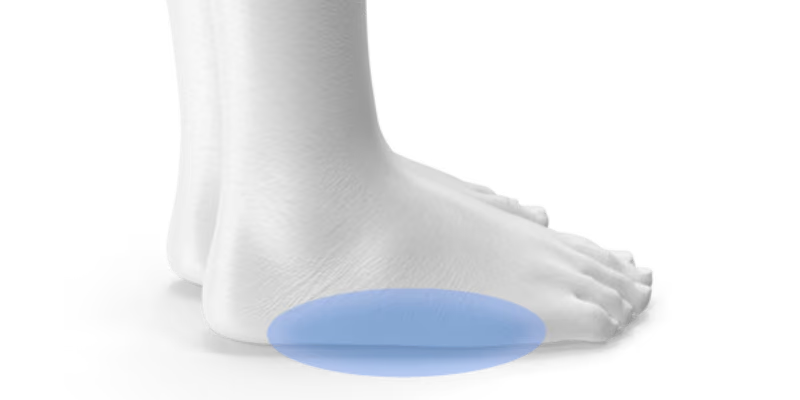
Like the more well-known flat foot, the hollow foot also presents as a malformation of the plantar arch . Unlike the former, however, the arch of the hollow foot is more arched than normal.
While flat feet have an almost completely flat arch, hollow feet have a curvature that is too pronounced , causing the sole of the foot to pronate, either inwards or outwards.
This malformation of the arch of the foot causes an uneven distribution of body weight across the sole of the foot. This not only leads to widespread pain across the entire sole of the foot, but also causes instability , difficulty walking , general mobility problems, and other malformations (such as claw toes).
Diagnosis of cavus foot and its importance

When you suspect you may be suffering from the pathology of hollow foot, it is of fundamental importance to contact a specialist to obtain an accurate and timely diagnosis.
If the pain in the sole of the foot is persistent and shows no signs of abating and the discomfort it causes is disastrously compromising your lifestyle, it is right not to underestimate the problem and to contact an orthopedist or podiatrist.
Only by consulting a specialist can you obtain an accurate and timely diagnosis and begin treating the problem as soon as possible.
Diagnostic test for cavus foot
After choosing the specialist to contact, the actual diagnostic test will proceed.
The test is performed following several specific phases.
First, the doctor analyzes the affected area, then the instep and the sole, focusing on the symptoms and overall mobility of the foot . After studying and cataloging the various symptoms, the doctor will also complete the patient's clinical picture.
This phase, called anamnesis , involves examining the patient's general health, focusing especially on previous pathologies or other issues that may affect the foot. This phase is essential for determining the patient's health status and thus being able to begin evaluating the most appropriate treatment plan.
To obtain further certainty and thus have an even more precise diagnosis, it is commonly prescribed to prescribe ultrasounds , X-rays and MRIs , so as to also have specific images of the bone structure and tissues.
These additional analyses, combined with monitoring of walking and foot behavior, are designed to detect the severity of the pathology , always in order to evaluate the most suitable therapeutic path for the patient.
Conservative treatments for hollow foot

Once a diagnosis of pes cavus has been made , if this has not completely compromised the mobility of the foot or the patient's quality of life, it is usually recommended to undertake a therapeutic path with conservative treatments.
Conservative treatments are so called because they aim to "preserve" the health and remaining mobility of the foot, trying to treat the symptoms and reduce them.
Depending above all on the severity of the pathology, therefore, different treatments will be taken into consideration.
Among the main conservative treatments are:
- Orthopedic shoes and braces: Given the instability caused by high arches, wearing orthopedic shoes helps support the arch, reducing stress on the sole of the foot during mobility. Foot braces and shoes are typically stiffer than traditional shoes, to provide the right lateral support and cushion the stress of walking.
- Insoles and Orthoses: For more complex cases of hollow foot, orthopedic shoes may not be enough and the use of orthosis e custom insolesLike orthopedic shoes, insoles help stabilize the foot, distribute body weight evenly, and reduce stress on the sole of the foot, which will also lead to a reduction in pain.
- Drug therapy: When the inflammation and pain in the sole of the foot show no signs of abating, becoming even more disabling, the doctor may also decide to prescribe painkillers and anti-inflammatory drugs. However, these medications only serve to relieve symptoms and not to cure the condition. In fact, the doctor will specify that the drug therapy will be temporary, not permanent.
- Physiotherapy program: Following the instructions and advice of a physiotherapist, the patient can undertake a course of physiotherapy aimed at improving foot stability and strengthening muscles. Typically, the program focuses on muscle strengthening, balance, and stretching exercises (especially for the tendons). All of this helps strengthen the foot overall and allow the patient to live as fulfilling a life as possible.
However, when conservative treatments do not have the desired effects, surgery can also be considered , always weighing the pros and cons of the choice and relying on specialists.
SmartHallux: the specialists you can trust

To determine the best and most appropriate therapeutic path for each type of pathology and patient, one must rely on competent and reliable specialists in the sector.
SmartHallux responds to these fundamental prerogatives.
Thanks to a team of specialists led by internationally renowned surgeon Dr. Luigi Manzi , SmartHallux not only ensures expertise and professionalism, but also uses the best and most innovative techniques for treating foot and ankle conditions.
Furthermore, SmartHallux has the great merit of studying and designing personalized therapeutic paths , based not only on the type of pathology to be treated but also, and above all, on the expectations and needs of patients.
Don't miss the opportunity to trust the best in the industry!
Book your SmartHallux appointment . The process is simple and straightforward.
Simply click here and choose how, where, and when to make your first SmartHallux visit.