
Heel Spur: Insights and Treatments
A heel spur is a calcium deposit under the heel bone, common in people who stand or exercise a lot. The symptoms and the treatments, from insoles to surgery.
By Dr. Luigi ManziUpdated on
People who spend a lot of time on their feet or who perform intense and frequent physical activity could easily be affected by one of the most painful and limiting pathologies: heel spurs.
This appears as a visible bony growth , located in the lower heel and is usually caused by a calcification process due to acute inflammation affecting the plantar fascia.
In this article, we will delve deeper into the concept of heel spurs , also looking at the recommended treatments to prevent this very painful condition.
How does a heel spur form?
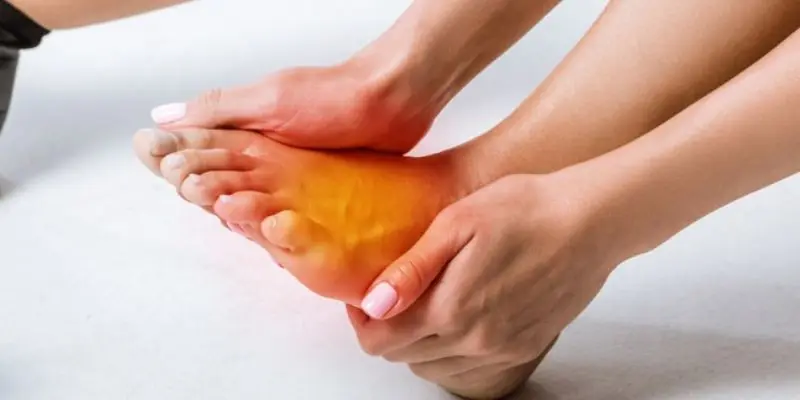
When the heel spur becomes visible to the naked eye, it means that the calcification process that caused it has now completed its course.
This calcification process occurs primarily due to severe inflammation involving the plantar fascia. The sole of the foot is constantly subjected to stress and pressure, primarily due to normal daily mobility activities.
However, when stress and pressure become excessive, the plantar fascia is very likely to become inflamed . When the inflammation becomes acute and worsens, micro-tears can also form . The body's natural response to these micro-tears is calcification: the body attempts to heal the tears, but the resulting calcium buildup tends to create bony protrusions, as in the case of heel spurs.
Symptoms and causes of heel spurs

Even before the heel spur becomes visible to the naked eye, several symptoms can be observed that indicate the presence of a problem.
Let's see together what the most common and well-known symptoms of heel spurs are:
- swelling and redness on the sole of the foot, symptom of inflammation;
- stiffness in movements: difficulty even in simply placing the foot on the ground;
- heel pain: after walking a lot or standing for too long, as well as upon waking up (i.e. after a period of inactivity).
Once the symptoms of heel spurs have been listed, it will also be a good idea to investigate their causes.
We've already explained the process of calcification and how it's linked to inflammation of the plantar fascia. However, the causes that lead to this process can be traced back to both a genetic predisposition and the perpetuation of bad habits that are harmful to foot health.
The main causes, therefore, which contribute to the development of heel spurs are:
- wrong posture and altered biomechanics;
- excessive body weight and unhealthy as it brings additional stress and pressure to the soles of the feet;
- use of uncomfortable shoes and inadequate;
- intense and excessive sporting activity, as well as the practice high-impact sports.
Diagnosis of heel spur
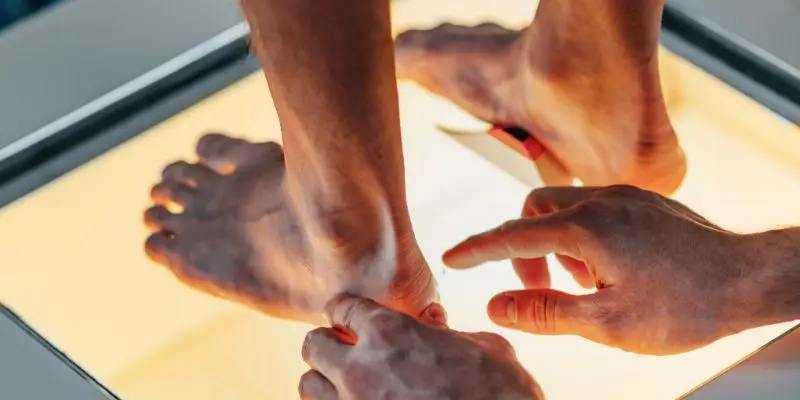
To be certain that you have developed a heel spur, but above all to act promptly to treat it in the best possible way, it will be of fundamental importance to obtain an early and precise diagnosis.
To do this, you'll need to consult a specialized doctor. The diagnostic test will follow several specific steps.
It begins with an objective physical examination , during which the doctor analyzes the heel, the sole of the foot, and the symptoms described by the patient. In addition, the doctor always takes a complete anamnesis of the patient , which consists of an in-depth study of both the habits that may have contributed to the development of the problem and the patient's complete medical history.
Subsequently, imaging tests (X-rays, ultrasounds and MRIs) are necessary to obtain precise images that can reveal the true state of the bones and tissues , as well as exclude any other type of pathology.
Obtaining an accurate and early diagnosis is the only way to begin solving the problem promptly, evaluating and choosing the best treatment path to eradicate the heel spur.
Treatments for heel spurs
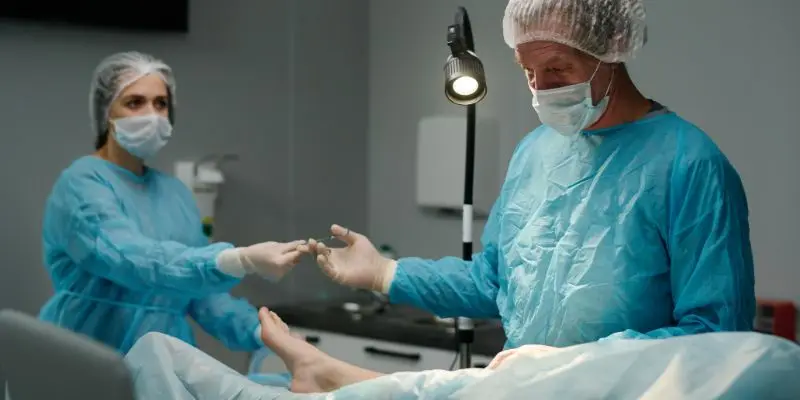
Depending on the severity of the condition and the patient's aptitude, the doctor will advise and guide the patient's choice of the most appropriate treatment.
There are conservative treatments , so called because they are designed to manage the symptoms and fight the disease without resorting to surgery. In fact, their advantage is that they are not particularly invasive.
There are also surgical treatments , more invasive than the first ones, but also more effective.
Conservative treatments
After obtaining a precise diagnosis, the doctor usually recommends undertaking a therapeutic course with conservative treatments , obviously if the severity of the pathology is minimal.
We now list the most common and effective conservative treatments for heel spurs:
- rest and cold therapy: do not over-stress the heel and sole of the foot with proper rest which is useful for relieving swelling and inflammation; rest, also combined with cold therapy (ice packs for 15-20 minutes several times a day), promotes walking and helps reduce swelling and tolerate pain;
- ad hoc exercises and physical therapies: targeted exercises such as stretching for the heel and plantar fascia, as well as massages (performed by a physiotherapist), help keep the heel and plantar fascia elastic and strong;
- use of orthoses and insoles: they serve above all to better support the entire foot and to prevent excessive stress and pressure from affecting the plantar fascia and the heel;
- taking nonsteroidal anti-inflammatory drugs: acts to reduce inflammation and tolerate pain.
Surgical treatments
If conservative treatments do not solve the problem and do not achieve the desired results, the doctor may also recommend surgery.
There are several surgical treatments to cure heel spurs, and among these are:
- the shock waves: it does not require any incision, but only the use of strong acoustic waves which should destroy the calcifications and promote the healing of the damaged tissues;
- the infiltrations: to reduce both inflammation and pain, corticosteroid injections are administered;
- actual surgical intervention: involves the complete removal of the bony growth (the spur) through a surgical incision; it is the most invasive of the techniques and requires specific post-operative rehabilitation.
Possible complications of heel spurs

If treated poorly or not in time, heel spurs could develop equally serious complications .
As already explained, heel spurs are primarily caused by inflammation of the plantar fascia; this inflammation can become chronic and take the name of plantar fasciitis . In this case, the heel spur, still present, would only tend to further aggravate the situation, seriously compromising the overall mobility of the foot and the quality of life of those affected.
Another complication is the deformity of the toes: " hammer toes ." These deformities are caused by the body's natural compensatory posture to combat the pain of the heel spur, which prevents normal walking.
If a heel spur isn't treated, it could continue to worsen, primarily due to the pressure it's subjected to. This pressure puts pressure not only on the heel but also, and more importantly, on the nerves in the foot. As the nerves are also affected, neuropathy could develop , making the pain more acute and further impairing foot mobility.
The SmartHallux solution

If you suspect you may be suffering from heel spurs and are looking for specialists in the field to rely on, know that SmartHallux is the solution you were looking for.
Thanks to the latest-generation techniques , the most technologically advanced instruments and the great professionalism and expertise of the team of specialists, SmartHallux ensures maximum care and rapid resolution of any foot and ankle pathology.
Under the expert guidance of Dr. Luigi Manzi , an internationally renowned surgeon, the SmartHallux team combines the best and most advanced techniques with an approach totally dedicated to the needs and expectations of any type of patient.
Book a visit with SmartHallux

Always focused on patient well-being and comfort, SmartHallux also offers a quick, convenient and easy-to-understand appointment booking system.
Just click here and choose how, where and when to have your first SmartHallux visit.
Don't wait for foot and ankle problems to irreparably compromise your life.
Choose health, choose SmartHallux!