
Inner Ankle Pain: What You Need to Know
Pain on the inside of the ankle can come from the posterior tibial tendon, tarsal tunnel syndrome or arthritis. The causes, the symptoms and what to do.
By Dr. Luigi ManziUpdated on
Does the inside of your ankle hurt? You're not alone. Every week, I see patients in my office with this problem, often after a minor sprain that seemed to have healed, or perhaps without even remembering a specific injury. "Doctor, it hurts here inside," they say, pointing to the area under the medial malleolus.
Inner ankle pain is more common than you think. And most importantly, the causes may be different than you think.
The ankle, after all, is one of the most complex joints in our body. Consider that every time you walk, jump, or simply get up from a chair, this joint must support your entire body weight and coordinate movements in multiple directions simultaneously.
Ankle Anatomy: Understanding What's Inside
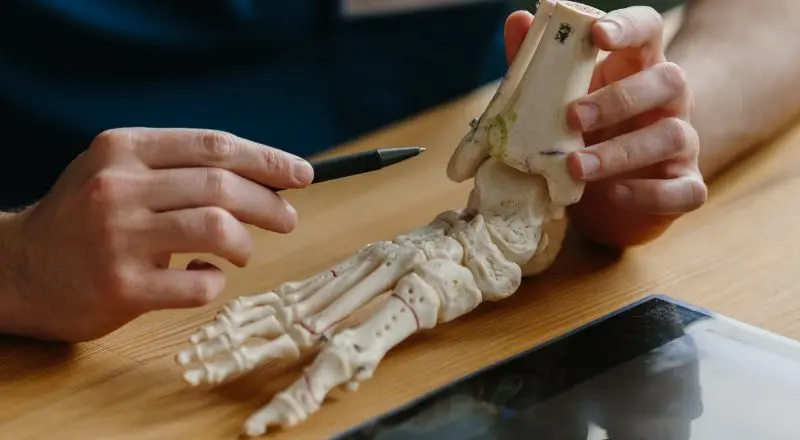
Before we talk about pain, let's take a look at our ankle. The inner ankle is dominated by that bony protrusion you can feel—the medial malleolus, which is part of the tibia. It's like an anchor that stabilizes the entire ankle joint.
But it's not just bone. Around the medial malleolus, we have a whole system of ligaments, tendons, and muscles that work together. The deltoid ligament, for example, is a fan-shaped structure that extends from the medial malleolus and attaches to various bones in the foot. It's what prevents the foot from "falling" inward when we walk.
Then there are the tendons. The tibialis posterior is the one that often gives me the most problems – it runs right behind the medial malleolus and can easily become inflamed, especially in those with flat feet or who play sports that require frequent changes of direction.
The Causes of Pain: It's Not Always What It Seems
"But doctor, I've never had any trauma!" This is a phrase I hear often. In reality, inner ankle pain can have many different causes.
Sprains are the most obvious cause. But be careful: not all sprains are the same. The classic "twist" we all know usually affects the outside of the ankle, but when the mechanism is different—perhaps the foot turns too far inward—the deltoid ligament can be affected.
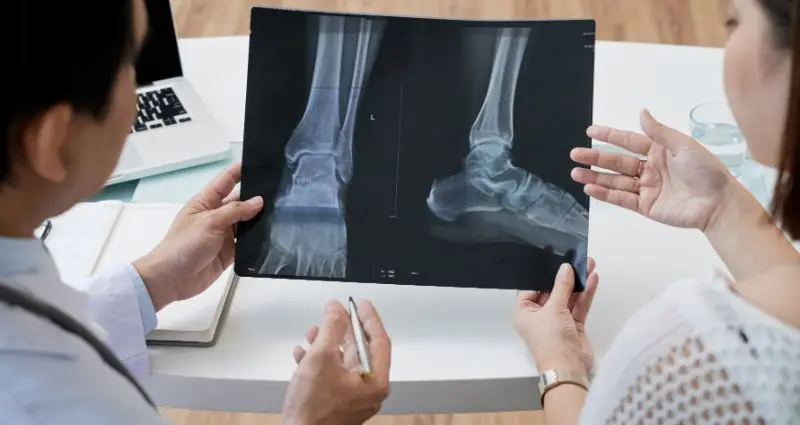
Stress fractures are more subtle. The other day, a runner came to me who had been experiencing increasing pain in his inner ankle for weeks. The X-ray revealed a small stress fracture of the malleolus. "But I've never fallen!" he told me. Exactly. These fractures arise from the constant repetition of athletic movements.
Posterior tibial tendinitis is another interesting story. This tendon works incredibly hard when we have flat feet or when we suddenly change shoes or training surfaces. It becomes inflamed, painful, and the patient often thinks they've done something terrible.
Then there's osteoarthritis. Yes, the ankle can also develop osteoarthritis, especially after major trauma or simply with age. The pain in this case is duller, worsening in the morning and after periods of rest.
Symptoms: What Patients Tell Me

“Doctor, when I put my foot down in the morning, it feels like I'm being pricked with a needle.” Or: “It feels like a weight is pulling me down.” The symptoms of inner ankle pain vary greatly depending on the cause.
The pain can be sharp and stabbing, as with acute sprains, or dull and constant, as with chronic tendinitis. Patients often describe a feeling of instability: "My ankle feels like it's giving way."
Swelling is common. It's not always obvious, but if you compare one ankle to the other, you often notice the difference. Sometimes it's just a slight thickening around the inner malleolus.
When should you worry? If the pain is sudden and intense after an injury, if there's a visible deformity, if you can't put any weight on the ankle, or if you experience tingling and numbness. In these cases, it's best not to wait.
How I Diagnose: My Approach

When a patient sits down with inner ankle pain, the first thing I do is listen. "Tell me exactly when it started and how." The medical history is crucial.
Then the physical examination. I watch how he walks, how he places his foot. I palpate the entire area to understand exactly where the pain is. Pain at the tip of the inner malleolus is different from pain lower down, toward the arch of the foot.
I perform specific tests. For example, I ask the patient to stand on tiptoe on one leg. If the posterior tibial tendon is affected, this becomes difficult or impossible.
Instrumental tests? It depends. An X-ray is always useful to rule out fractures. If I suspect tendon problems, an ultrasound provides valuable information in real time. I reserve an MRI for more complex cases or when I need to plan surgery.
Treatments: There is no single recipe

"Doctor, what can I do?" The answer always depends on what we've found. For an acute sprain, the RICE (rest, ice, compression, elevation) protocol still works very well. But be careful: rest doesn't mean staying out of action for weeks.
Anti-inflammatory drugs help in the acute phase, but they shouldn't be a long-term solution. I use them to quell the initial inflammation and allow the patient to begin moving.
Physiotherapy is often the key to success. A good physiotherapist doesn't just provide passive therapies—they work on proprioception, specific muscle strengthening, and correcting incorrect movements.
Cortisone injections? I use them sparingly, especially in cases of recalcitrant tendonitis or associated bursitis. They're not a panacea, but in expert hands they can provide significant relief.
Surgery is the last resort. It's obviously necessary for displaced fractures, but it can also be the solution for some chronic tendinitis cases that don't respond to conservative treatment.
Prevention: Better to Avoid Than to Cure
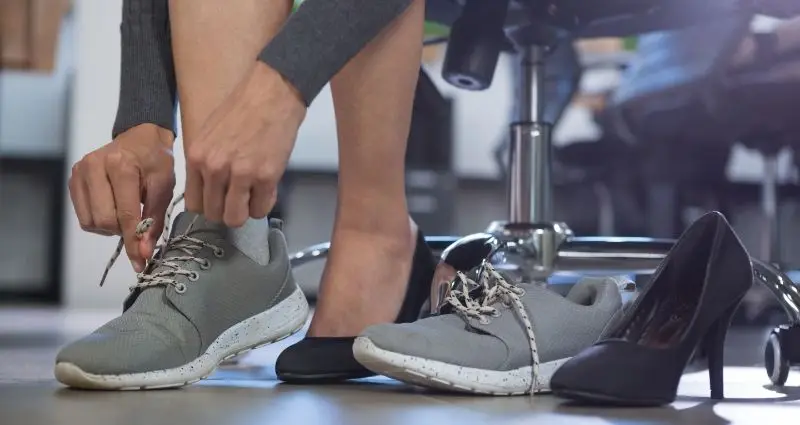
Preventing inner ankle pain is possible, at least in part. Warming up before sports isn't optional—it's essential. And I'm not talking about a couple of jumps, but a proper activation protocol.
The right shoes make all the difference. A shoe that's worn out or not suited to your foot type can cause problems. In my office, I often see runners who change everything—diet, training, supplements—but continue running in two-year-old shoes.
Specific muscle strengthening is important, especially for athletes. The leg and foot muscles work as a team, and if one isn't doing its job, the others become overloaded.
SmartHallux: Where We Can Help You

Dr. Luigi Manzi, who has gained specific experience in this field, follows each patient with a personalized path using the most modern techniques.
The SmartHallux team treats conditions such as hallux valgus , Morton's neuroma , and other deformities that cause foot pain. Providing comprehensive support throughout the treatment process, SmartHallux can be a winning choice for effective treatment tailored to your needs. Book your specialist consultation with the SmartHallux team now (opens in a new tab).
Our approach is multidisciplinary—we don't just work with surgeons, but with a team that includes specialized physiotherapists and professionals who specifically treat foot and ankle problems. We use innovative technologies for diagnosis and, when necessary, minimally invasive surgical treatment.
FAQ
Doctor, will this pain in my inner ankle go away on its own?
It depends on the cause. A mild sprain can resolve in a few weeks with proper treatment, but problems like tibialis posterior tendinitis tend to become chronic if left untreated.
Can I continue to play sports with this pain?
This isn't a good idea. Pain is always a warning sign. Continuing to exercise can turn a minor problem into something more serious. It's best to stop, figure out what's wrong, and then gradually resume.
Do infiltrations always hurt?
Not necessarily. With modern techniques and the use of ultrasound to guide the injection, the discomfort is very limited. Sure, it's not as pleasant as drinking coffee, but it's tolerable.